News
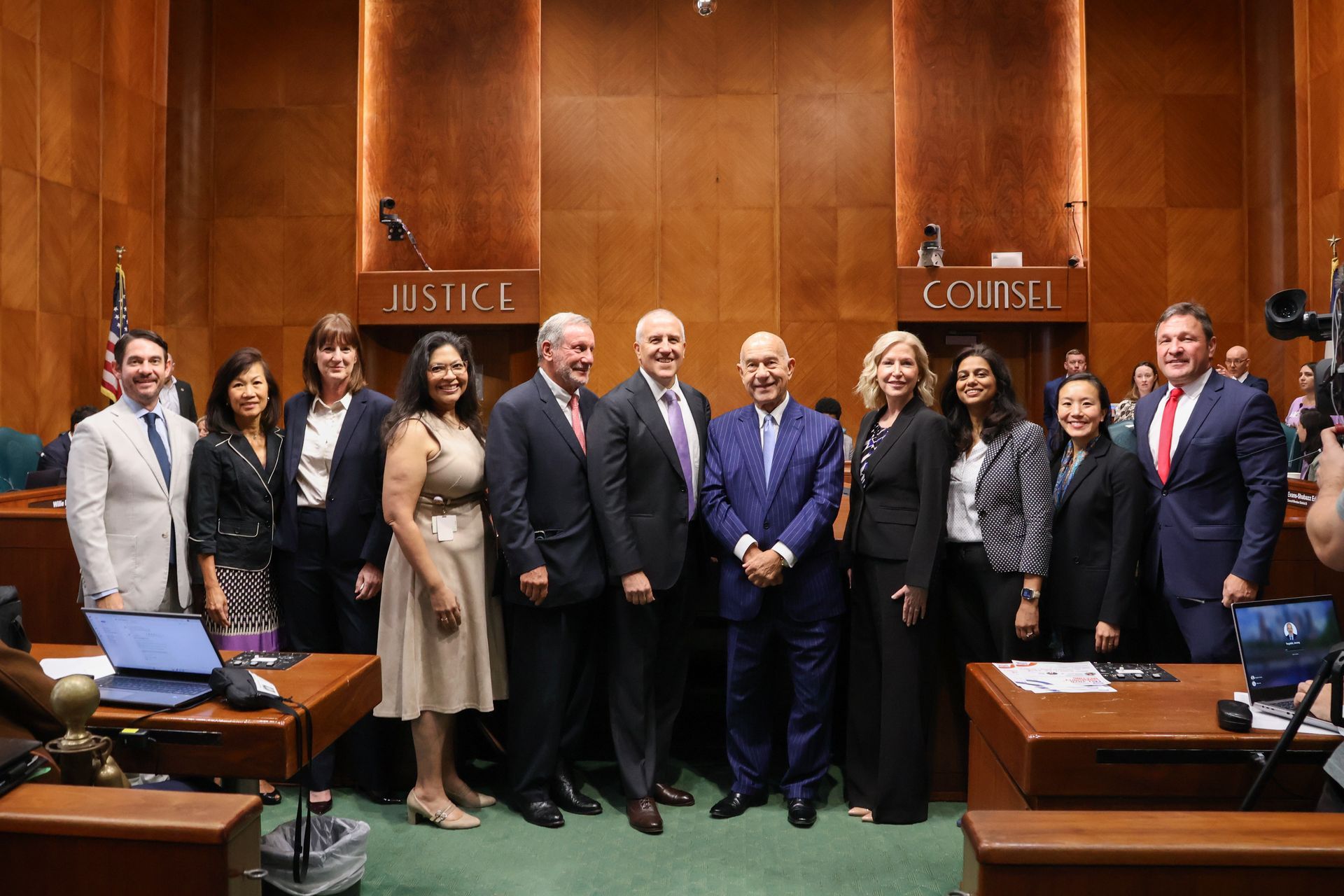
HOUSTON, Texas (Oct. 7, 2026) — Local private philanthropic leaders announced today the establishment of an unprecedented, dedicated fund to launch Pathways to Independence (P2I), a new regional, $48 million homelessness initiative. P2I will build on the area’s nationally acknowledged momentum to end street homelessness and to resolve new instances of homelessness within 90 days. P2I is designed to achieve long-term sustainability by securing public funding beyond an initial three-year period. $34 million (70%) has already been raised from local private philanthropies toward the $48 million goal. Speaking on behalf of philanthropic investors in this initiative, Ryan Dolibois, executive director of Sarofim Foundation and Chair of the P2I Executive Leadership Committee said, “The City of Houston, Harris County, and CFTH and the partners of The Way Home have made remarkable strides in addressing homelessness . Pathways to Independence is a regional action plan that builds on this work and writes the next chapter in how we address homelessness. We are building significant momentum and providing additional critical investment to amplify proven results, address persistent gaps in the current homeless response system, and give more people a path from homelessness to stability.” Co-created with the City of Houston, Harris County and the nonprofit Coalition for the Homeless of Houston/Harris County (CFTH), P2I’s first funders were The Brown Foundation, Inc.; Cullen Foundation; Houston Endowment; Kinder Foundation®; and Sarofim Foundation . The Homelessness Strategic Philanthropy Fund, a component fund of Greater Houston Community Foundation, will receive and steward charitable contributions and support grantmaking aligned with the initiative's approved strategy. (For a full list of funders to date, see Attachment 1.) Expanding the Region’s Response The Way Home is the Continuum of Care — or homeless response system as funded by the U.S. Department of Housing & Urban Development — serving Houston and Harris County, Fort Bend County, and Montgomery County. Coordinated by CFTH, it is a public-private partnership of dozens of organizations working together to make homelessness rare, brief, and nonrecurring. The Way Home has made nationally recognized progress , housing more than 38,000 people by aligning federal funding around a shared strategy of permanent housing programs. P2I builds on this model by adding faster, more flexible interventions; more accessible ways to reach help; stronger behavioral-health and healthcare coordination; and greater collaboration across systems that encounter the same individuals repeatedly. Among other interventions, P2I will expand available options for people who can quickly resolve their homelessness via targeted strategies. These “rapid resolutions” include creative problem-solving and short-term stabilization. Stronger coordination across housing, behavioral health, healthcare, criminal justice, and community service systems to reduce inflow into homelessness will also be critical. “Not everyone requires — or can qualify for — permanent housing programs to resolve their homelessness. P2I is designed for people our existing resources cannot currently reach quickly or effectively,” said Kelly Young, president and CEO of CFTH . “With this strategic philanthropic fund, our homeless response system will be able to fill critical gaps, test promising approaches, and invest in what works. The City of Houston and Harris County each bring essential expertise and investments to this regional strategy.” Building on City Investments The City of Houston recently made a bold investment in homelessness response with the opening of 419 Emancipation , designed to help people move off the streets and into a safe, structured environment where they can stabilize, have their needs assessed, connect to treatment and supportive services, and ultimately transition to appropriate housing solutions. “419 Emancipation has become an important new opportunity for people experiencing homelessness. And while we are seeing meaningful outcomes, there remains a critical need for more exit doors that lead to lasting stability,” said Houston Mayor John Whitmire . “Pathways to Independence will help create those next steps. I commend Houston’s philanthropic community for building on the City’s work with this substantial commitment. Let’s get to work.” Advancing Harris County’s Leadership The Harris County Sheriff’s Office, Harris County Housing & Community Development, Harris County Public Health, the Harris County Public Defender’s Office, the Harris County Office of County Administration, and other County partners all contribute to this work. These regional public systems often encounter people at critical moments when the right intervention can prevent homelessness bringing deep criminal justice, reentry, behavioral health, healthcare, housing and community service systems expertise and resources. “Harris County is committed to helping our communities thrive by strengthening eviction prevention and other supports that keep people housed and prevent homelessness before it begins,” said Harris County Precinct 1 Commissioner Rodney Ellis . “The County is continuing to invest to expand these proven strategies and, through this joint effort, leverage our resources to move faster and build lasting solutions. Housing is a human right, and I look forward to advancing our work to ensure every resident has a safe, stable place to call home.” “Harris County has made meaningful progress in reducing homelessness, and I am proud of the work we have done, but our work is not done yet,” said Harris County Precinct 2 Commissioner Adrian Garcia . “We are still seeing working families who are one paycheck away from losing everything. That is why we cannot afford to stand still. We must keep adapting and keep connecting people to the right services at the right time. That is exactly why I fully support Pathways to Independence. It gives people a hand up, meeting them where they are and helping them build a stable future.” “I’m proud to support Pathways to Independence, the next chapter in Harris County’s fight to end homelessness,” said Harris County Precinct 4 Commissioner Lesley Briones. “This data-driven initiative meets each person where they are, offering immediate assistance to help our neighbors get back on their feet with short-term relief, plus long-term support like housing, transportation, domestic violence services, and behavioral healthcare. Through the power of public-private partnership, we are doubling down on our efforts so that more people can find stability faster. We are relentlessly committed to ending homelessness and creating a Harris County where everyone can thrive." A Cross-Sector Strategy See the accompanying Supplemental Quotes document for additional quotes from: Ric Campo, Chairman and CEO, Camden Property Trust Thao Costis, Executive Director, Harris County Housing & Community Development Ed Gonzalez, Sheriff of Harris County, Harris County Sheriff's Office Steve Kean, President and CEO, Greater Houston Partnership Kris Larson, President and CEO, Downtown Houston+ Keena Pace, President and CEO, The Harris Center for Mental Health and IDD Mike Nichols, Director, City of Houston Housing and Community Development Department Larry Satterwhite, Director, Mayor's Office of Public Safety and Homeland Security The Brown Foundation, Inc. Cullen Foundation Houston Endowment Kinder Foundation® Stewarding the Investment Greater Houston Community Foundation will steward the dedicated component fund supporting the Pathways to Independence initiative. Foundations, corporations, families, and individuals interested in contributing should contact CFTH before making a donation . Katina Baldwin, senior director of development at CFTH, will coordinate contributions to go to the Homelessness Strategic Philanthropy Fund at Greater Houston Community Foundation, a Texas nonprofit corporation, and help ensure timely acknowledgment. She can be reached at katina.baldwin@cfthhouston.org or 832-531-6063. How to Get Help People experiencing homelessness or seeking local assistance can visit CFTH’s online Help Card for information about shelters, day centers, health care and other community resources. For free information and referrals to local assistance programs, call 2-1-1, the United Way of Greater Houston’s 24-hour helpline. About Pathways to Independence Led by an Executive Leadership Committee, Pathways to Independence (P2I) brings together philanthropy; local government; healthcare; business, nonprofit and community partners to resolve homelessness across Houston and Harris County. The initiative builds on the progress of The Way Home while expanding options for people who may not need or qualify for permanent housing programs. Through flexible investment, cross-sector coordination and disciplined evaluation, Pathways to Independence will help more people move from crisis to stability. For more information, visit https://www.cfthhouston.org/pathways About the Coalition for the Homeless of Houston/Harris County (CFTH) The Coalition for the Homeless of Houston/Harris County (CFTH) makes solving homelessness possible. We bring people, data, dollars, and systems together to accelerate sustainable solutions and to transform how the Houston region responds to homelessness. A 501(c)(3) nonprofit organization, CFTH is the convener and coordinator of Pathways to Independence and serves as the lead agency to The Way Home , our region’s Continuum of Care for homelessness response. For more information, visit www.cfthhouston.org . REGIONAL LEADERS ON PATHWAYS TO INDEPENDENCE Supporting Statements | Executive Leadership Committee (ELC) of P2I For the complete list of ELC members, visit https://www.cfthhouston.org/pathways Keena Pace, LCSW, Chief Executive Officer, The Harris Center for Mental Health and IDD "Housing stability and behavioral health are deeply connected. People are more likely to succeed when all systems work together rather than in isolation. Pathways to Independence creates an opportunity to strengthen those connections and help more people access the services they need to regain stability and improve their quality of life in a brand-new way." Kris Larson, President and CEO, Downtown Houston+ "A thriving downtown depends on both economic vitality and human well-being. Pathways to Independence has the potential to make a meaningful difference by helping more people move from homelessness into stability while improving the experience of residents, employees, visitors and businesses alike. That is good for the individuals receiving help, good for Downtown and good for Houston's future." Steve Kean, President and Chief Executive Officer, Greater Houston Partnership "Houston has a long history of solving complex challenges through collaboration. Pathways to Independence brings together philanthropy, government, business and community organizations around a shared goal and a shared set of outcomes. That kind of alignment is one of our region's greatest strengths." Michael C. Nichols, Director, City of Houston Housing and Community Development Department & Larry Satterwhite, Director of the Mayor’s Office of Public Safety and Homeland Security “We are grateful for these additional philanthropic funds, which will leverage government investment and give Houston’s homeless response system greater flexibility to help transition people from the streets to greater safety, stability and, ultimately, a safe place to call home.” Ric Campo, Executive Chairman of the Board, Camden Property Trust "Housing is foundational to opportunity. When people have stable housing, they are better positioned to succeed in work, education, health and family life. Pathways to Independence reflects a shared commitment to expanding stability while strengthening the systems that help people recover from housing crises and move forward." Sheriff Ed Gonzalez, Harris County Sheriff "We often encounter people at some of the most difficult moments in their lives. Too many individuals leave incarceration facing barriers that make it difficult to regain stability. Pathways to Independence supports a more coordinated approach that connects people to housing, treatment and services before they return to crisis. Helping people succeed after incarceration strengthens families, improves public safety and creates better outcomes for the entire community." Supporting Statements | Philanthropy The Brown Foundation, Inc. “The Brown Foundation responds thoughtfully and flexibly as Houston’s needs evolve,” said Ann Ziker, executive director of The Brown Foundation, Inc . “Pathways to Independence pairs visionary leadership with action and direct service. Our focus remains on the organizations and people doing the work to make Houston stronger.” Cullen Foundation “Pathways to Independence reflects the entrepreneurial spirit, optimism and collaboration that guide Cullen Foundation’s investments in Houston,” said Scott W. Wise, chief executive officer and chief investment officer of Cullen Foundation . “It brings together rigorous thinking and innovative approaches with the potential to create change at scale.” Houston Endowment "We are deeply proud to have partnered in and supported our region’s work to end homelessness since 2012—and of the extraordinary cross-sector collaboration that has driven meaningful progress,” said Elisa Villanueva Beard, president and CEO of Houston Endowment . “Pathways to Independence builds on that momentum, once again bringing people together to address homelessness at its roots. By combining evidence and local expertise with continuous learning and rigorous evaluation, our region can identify what works, adapt when needed, and once again set a national standard.” Kinder Foundation® “Kinder Foundation believes in transformational giving that improves quality of life in Greater Houston,” said Nancy Kinder, president and CEO of Kinder Foundation . “We were pleased to be a part of the initial funding for this bold regional strategy that delivers meaningful results for people experiencing homelessness.” For more information on Pathways to Independence, view our Media Kit.
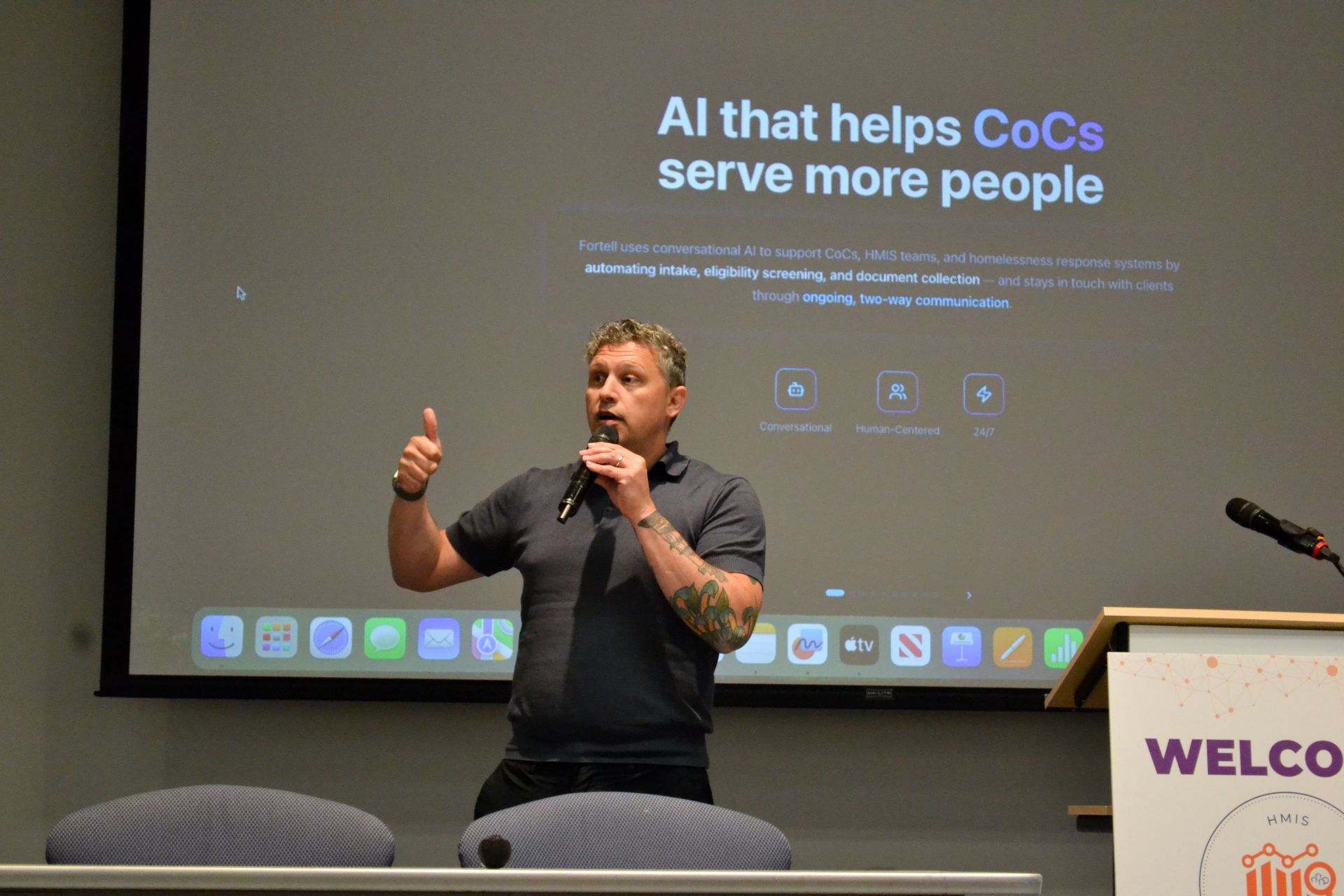
CFTH is testing how artificial intelligence can help connect people at risk of homelessness with existing prevention resources more efficiently.
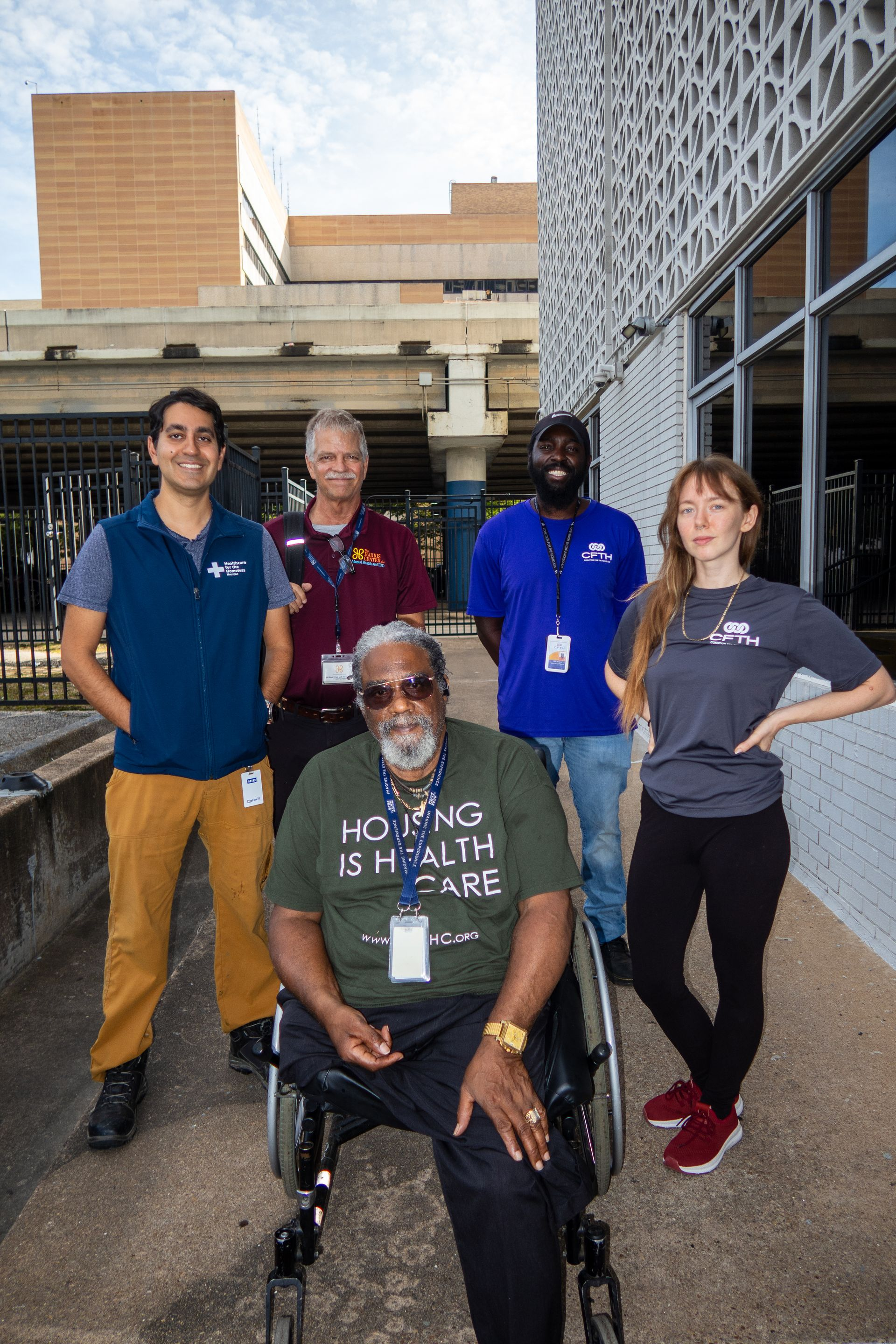
Learn how the SMART team brings CFTH and community partners together to connect people experiencing homelessness with coordinated care and support.
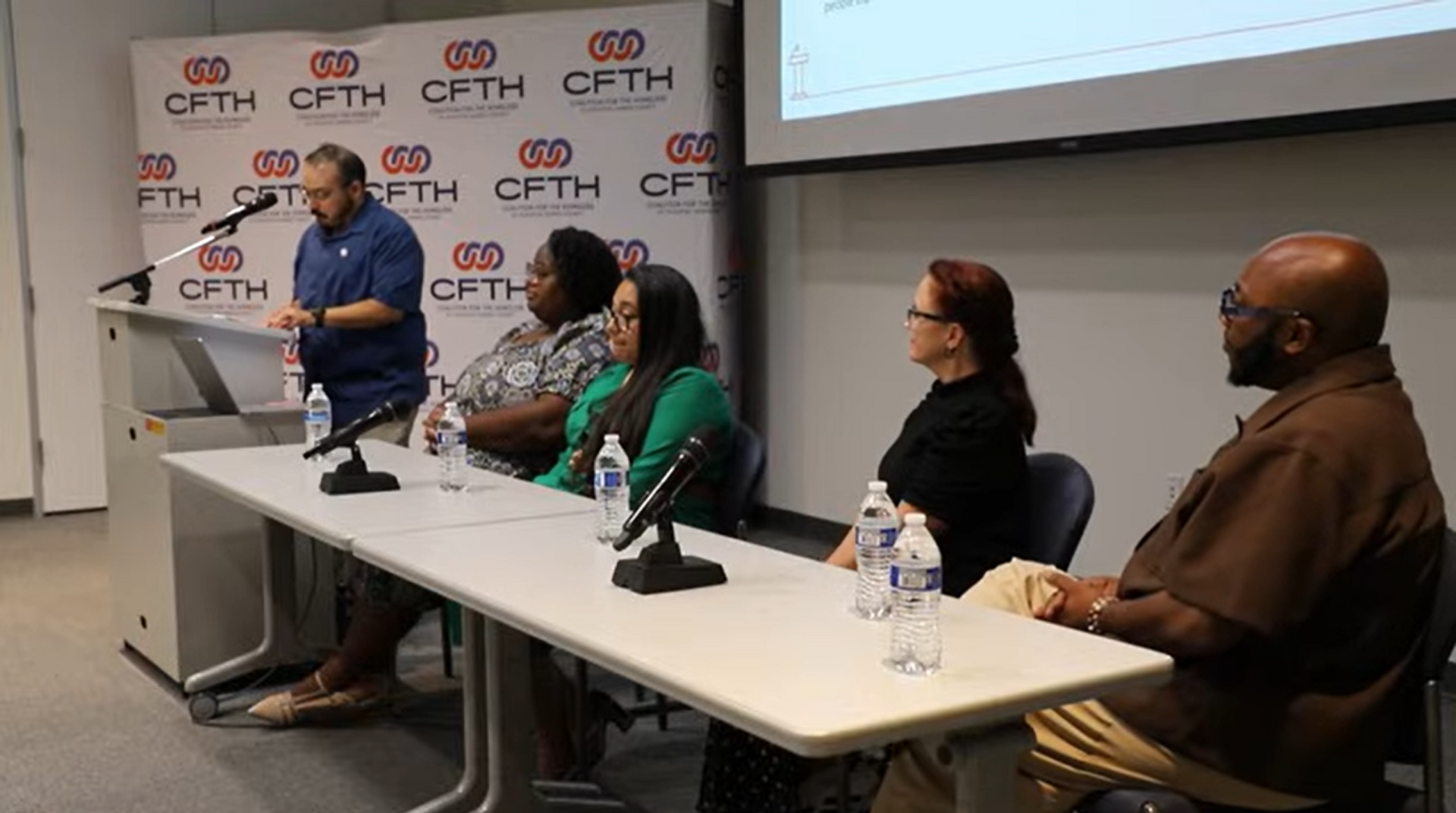
When someone experiences homelessness, the right solution is not always a long-term housing program. Sometimes a person needs help replacing an ID, reconnecting with family, finding an affordable shared home or overcoming another immediate barrier. That idea guided CFTH Presents: Building Better Pathways — Creating Faster Routes to Stability . The Coalition for the Homeless of Houston/Harris County (CFTH) hosted the discussion with leaders who oversee and carry out Rapid Resolutions across The Way Home, the Houston region’s homeless response system.

When most people think about homelessness, they picture someone sleeping outside or staying in a shelter. But homelessness often begins much earlier. A new survey from Rice University's Kinder Institute estimates that more than 140,000 adults across Harris, Fort Bend and Montgomery counties experienced temporary homelessness during the past year. Many of these individuals never slept outside. They stayed with friends or family because they had nowhere else to go, paid for motel rooms when they could, slept in their vehicles or found other temporary ways to get by. For those of us working in Houston's homeless response system, the estimate did not come as a surprise. What stands out is the scale. Our 2026 State of Homelessness report found that nearly 36,000 people interacted with The Way Home, Houston's regional homeless response system, during 2025. The Kinder estimate shows a much larger group of households struggling before they ever reach organizations like ours. Those numbers do not compete with one another. They tell the story of different points along the same continuum. By the time someone decides whether to enter a shelter or sleep outside, opportunities to prevent homelessness have often passed. The homeless response system helps people regain stability after they are in a shelter or on the street. Prevention happens months earlier, while people are still trying to hold on to their housing. Most people do not ask for help at the first sign of trouble. They work extra hours. They borrow money from family. They juggle bills. They hope next month's paycheck will solve this month's problem. Like most of us would, they try to solve the problem themselves. By the time they reach out, they often need far more help than they would have needed just a few months earlier. That is why Houston's prevention network is so important. Organizations like United Way of Greater Houston connect residents with rental assistance, utility assistance, benefits navigation and other resources that help stabilize households before they lose their housing. If you are struggling to keep up with rent, utilities or other essential expenses, do not wait until you have exhausted every option. Reaching out early gives providers more opportunities to help and gives families more options to stay housed. The Kinder research also reinforces another reality facing our region: We need more affordable housing. More than 140,000 adults experienced temporary homelessness in a single year because too many households live one unexpected expense away from losing their housing. That number points to a much larger population searching for homes they can afford long before they need homeless services. Houston's homeless response system continues to produce strong outcomes. More than 2,100 households moved into permanent housing during 2025, and 85% of those who exited homelessness two years ago remain housed today. At the same time, more than 7,100 people slept in shelters or on the street for the first time in 2025. Those numbers show that while our homeless response system continues to help thousands of people regain stability, new households continue to enter homelessness every day. The Kinder research gives Houston something we have not had before: a clearer picture of the households struggling before homelessness becomes visible. The Way Home will always play a critical role in helping people regain stability, but we also need to help more people before they ever need those services. That means strengthening prevention programs, expanding affordable housing and making it easier for people to ask for help early. Houston has repeatedly shown that when our community understands a challenge, it comes together to solve it. This research gives us a better understanding of where the next challenge begins.

Extreme Heat Is America's Deadliest Weather Hazard. Find Trusted Resources to Stay Safe and Help Others.
Houston, Texas (June 12, 2026) — The Coalition for the Homeless of Houston/Harris County (CFTH) today released the results of the 2026 Point-in-Time Count & Survey as part of the inaugural State of Homelessness in Houston report, a regional effort that combines PIT Count data with additional system indicators to provide a broader understanding of homelessness and system response across Harris, Fort Bend, and Montgomery counties. The report found 3,321 people experiencing homelessness on a single night in February 2026, reflecting relative stability compared to the 2025 Point-in-Time Count of 3,325. At the same time, the data highlights continued challenges related to unsheltered homelessness, economic and housing pressures, and the ongoing need for coordinated regional investment in homeless response and prevention efforts. This year’s report expands beyond the annual Point-in-Time (PIT) Count to include additional indicators generated through the Homeless Management Information System (HMIS) and HUD System Performance Measures (SPMs). Together, these measures provide additional context about year-round interactions with the homeless response system, housing stability outcomes, and inflow into homelessness over time. "The Point-in-Time Count is like a photograph," said Renee Cavazos-Benavides, vice president of the homeless response system at CFTH . "It captures an important moment, but there is always more happening outside the frame. That's why this year's report includes additional indicators that help us understand how people move into homelessness, how they move back into housing, and where we need to focus our efforts as a community." Key findings from the report include: 3,321 people experiencing homelessness during the February 2026 PIT Count 35,988 unique clients served through the homeless response system, The Way Home, during calendar year 2025 2,135 households housed by partners of The Way Home during calendar year 2025 7,110 people entering homelessness for the first time during federal FY25 85% of people who exited homelessness remained stably housed over a two-year period The PIT Count found 2,051 sheltered individuals and 1,270 unsheltered individuals across Harris, Fort Bend, and Montgomery counties. "The additional data shows our system is doing a great job maintaining our progress, in spite of additional economic stressors and pandemic funding having been exhausted,” said Kelly Young, president and CEO of CFTH . “Further progress will depend not only on additional investments in housing and services but also on our ability to expand new interventions to resolve homelessness more quickly." More than half of unsheltered individuals identified during the PIT Count had a matching HMIS record, reflecting ongoing engagement between outreach teams and people experiencing unsheltered homelessness. The findings underscore the continued need for outreach, additional pathways indoors, and sustained local investment to maintain system stability and respond to changing community needs. “The Point-in-Time Count gives our community a chance to pause and check in with people who may not yet be housed, sheltered, or consistently connected to services,” said Dr. Ben King, clinical assistant professor at the University of Houston Tilman J. Fertitta Family College of Medicine . “It helps us capture information that does not always show up in routine system data — including where people are staying, what barriers they are facing, and what they identify as the causes of their homelessness. Used alongside HMIS data, program performance measures, and community input, the PIT Count remains an important tool to answer questions we wouldn't get to ask otherwise." The annual PIT Count is required by the U.S. Department of Housing and Urban Development (HUD) and helps communities measure trends in homelessness over time. However, the PIT Count does not represent the total number of people who experience homelessness throughout the year. The 2026 State of Homelessness in Houston report combines PIT Count data with other key indicators to provide a more complete picture of homelessness across the region. Behind every number is a person, and a better understanding of homelessness helps communities respond more effectively. "The results remind us that homelessness is one of the most complex challenges facing our city. This is why the 419 Emancipation resource living facility is so important. We will continue working with stakeholders to move people off the streets and provide them with assistance, with the goal of reducing homelessness throughout our community and our neighborhoods," said Mayor John Whitmire. “I’m so proud that Harris County has reduced homelessness by more than 16% between 2018 and 2026, even when most other communities have seen homelessness skyrocket. We’re tackling the issue from both ends: we’re investing in programs to prevent poverty and promote economic mobility, and we’re also prioritizing safe and stable housing for those experiencing homelessness. Our community is only as successful as our most vulnerable residents, and I want to thank the Coalition for the Homeless, The Way Home, and all of our other local partners who have helped turn Harris County into a national model for reducing homelessness,” said Harris County Judge Lina Hidalgo. "The 2026 Point-in-Time Count confirms that our region has remained stable while homelessness has increased in many other parts of the country. However, stability is not enough when over a thousand of our neighbors are still sleeping outside. I’m grateful to the Coalition for the Homeless, The Way Home, outreach teams, law enforcement, service providers, and volunteers for showing that a coordinated local approach can help move people from crisis toward housing,” said Harris County Precinct 2 Commissioner Adrian Garcia . “As a former street cop and sheriff, I know we do not solve homelessness by simply moving people from one place to another. We solve it by treating people with dignity, connecting them to services, and creating real pathways to housing. I remain committed to working with our partners to prevent homelessness, support our veterans and most vulnerable residents, and make homelessness rare, brief, and nonrecurring in Harris County." “Harris County’s stability in the Point‑in‑Time Count stands out against the sharp increase in homelessness seen nationwide since the pandemic,” said Harris County Precinct 4 Commissioner Lesley Briones . “These results reflect years of continued investment in strengthening partnerships and expanding critical services, including two new emergency shelters for survivors of domestic violence. We know there is much more work ahead, and I remain committed to working alongside our partners to prevent and ultimately end homelessness in our community.” “Even with limited new funding and few new programs launched during this reporting period, Houston has remained relatively stable. What this latest data underscores is the need to continue investing in service-connected solutions like 419 Emancipation,” said Mike Nichols, Director of the City of Houston Housing and Community Development Department . “Now that 419 is operational, we are optimistic this triage, transition, and treatment model will help connect more individuals to care, services, and clear pathways toward stability. Behind every number is a real person, and our goal is to ensure more Houstonians are connected to the right support and a stronger path forward.” The full report and methodology appendix are available online here. The executive summary is available online here. The State of Homelessness report is available online here. For more information about the PIT Count and The Way Home homeless response system, visit www.cfthhouston.org. For more information and for results of previous years’ counts, please click here . For photos and B roll of volunteers conducting this year’s PIT Count, click here. ### The Coalition for the Homeless of Houston/Harris County (CFTH) is the backbone of Houston’s solutions to homelessness. It’s a nonprofit organization that uses the power of collective impact to move people experiencing homelessness into housing solutions. Learn more at www.cfthhouston.org . The Way Home is the homeless response system for Houston and Harris, Fort Bend, and Montgomery counties. It’s a public-private partnership — a network of dozens of homeless service providers and other government, philanthropic, and business partners. The Coalition for the Homeless of Houston/Harris County (CFTH), a 501c3, is the designated coordinator of The Way Home.
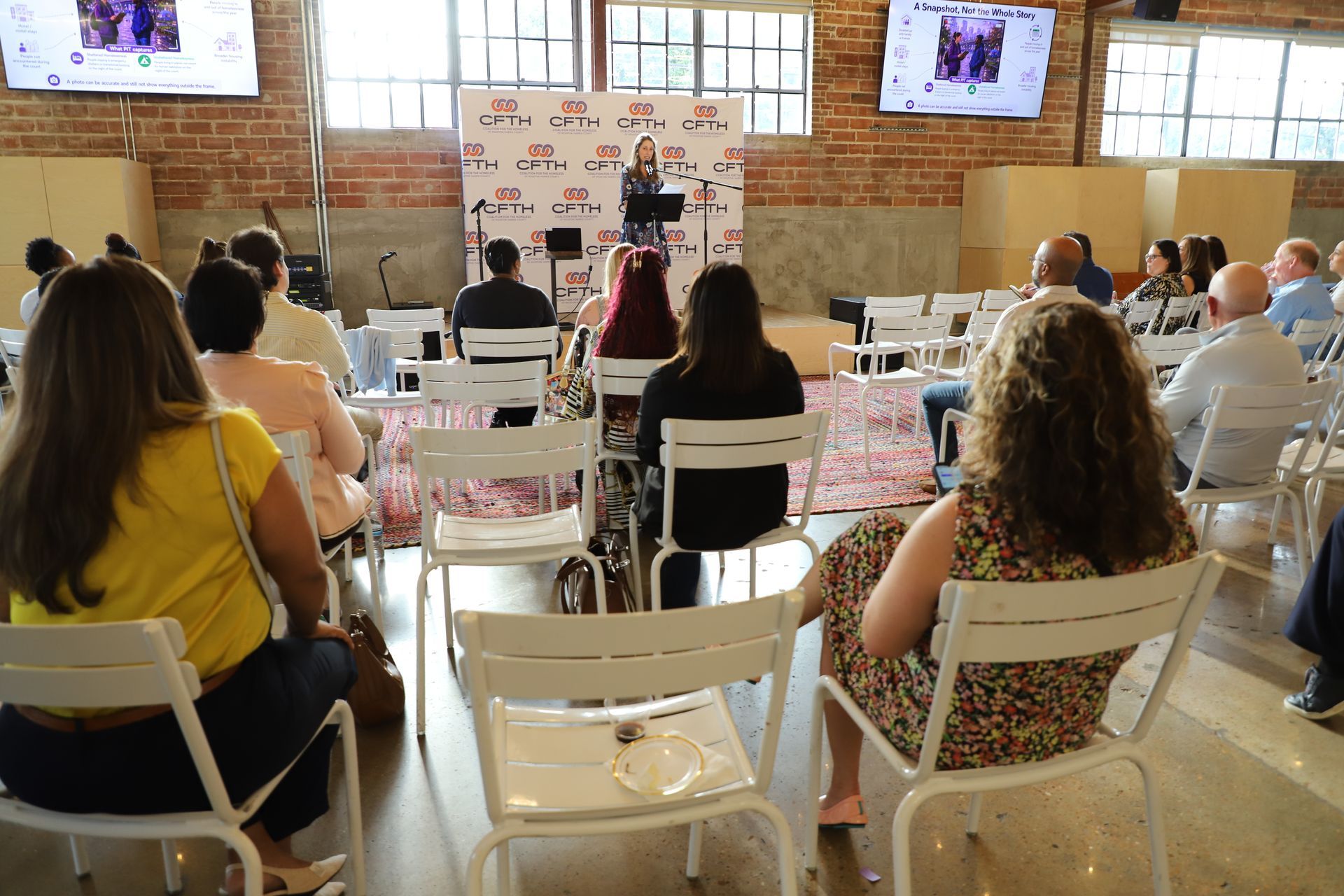
Every year, Houston’s Point-in-Time (PIT) Count helps provide a snapshot of homelessness across the region. But as speakers emphasized during CFTH Presents: The PIT Count — Behind the Numbers , no single number can fully explain homelessness, or the work required to address it. Hosted by the Coalition for the Homeless of Houston/Harris County (CFTH), the discussion brought together leaders from outreach, data systems, and public health to explore how Houston measures homelessness, why the PIT Count matters, and how year-round data helps guide the region’s homelessness response system.
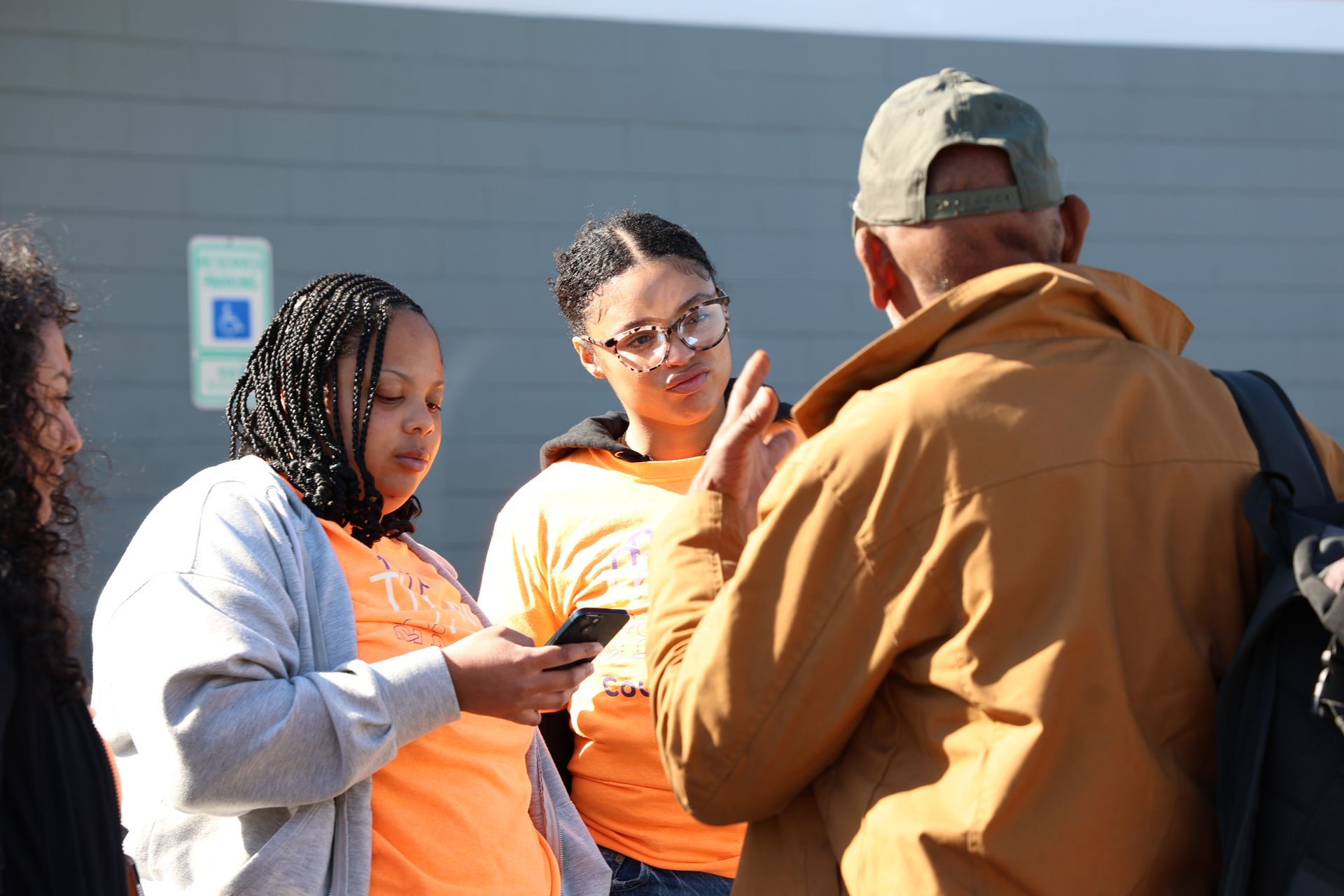
Houston, Texas (February 24, 2026) – This week, the nonprofit Coalition for the Homeless of Houston/Harris County (CFTH) is leading the annual Point-in-Time Homeless Count & Survey (“PIT Count”) to determine the number of people experiencing homelessness across Houston and throughout Harris, Fort Bend, and Montgomery counties. “We may see a slight uptick in the number this year, but we have a plan,” said Kelly Young, President & CEO of CFTH. “With the support of the City of Houston, Harris County, and private funders, we have been piloting new interventions to shorten the length of time people in our region experience homelessness. With adequate funding, we look forward to expanding those interventions to help people regain lives of self-determination.” CFTH coordinates the Houston region’s public-private homeless response system, The Way Home . Through this collaboration, The Way Home partners have successfully housed over 36,000 people since 2012. CFTH will release the results of Houston’s 2026 PIT Count in the summer, following independent verification by an epidemiologist. These findings will provide insight into how factors such as increases in the cost of living and the end of federal pandemic relief funding have impacted homelessness in our region. More information about the 2026 Point-in-Time Homeless Count & Survey The PIT Count offers a snapshot of how many people are experiencing homelessness in our region on a single night. This year, the “night of record” is Monday, Feb. 23. CFTH determines the number of people staying in shelters on that night by pulling records electronically from the Homeless Management Information System (HMIS) . The unsheltered count will be conducted on the following days, from Tuesday, Feb. 24 to Thursday, Feb. 26. More than 400 volunteers and staff of local nonprofit service provider partners will canvass the three-county region to survey people living unsheltered, using an app on their mobile devices. Results from the 2026 PIT Count will help gauge the progress of The Way Home’s ongoing collaborative efforts. It will also help CFTH and partner homeless outreach teams understand geographic shifts and target their outreach throughout the year. The PIT Count illuminates specific programmatic gaps and provides additional information needed to allocate resources most efficiently. The PIT Count is a requirement of the U.S. Department of Housing & Urban Development (HUD) for the annual Continuum of Care (CoC) funding process. HUD furnishes the majority of funding for programs that provide housing and supportive services to people experiencing homelessness in the region. In 2024, HUD granted more than $71 million to the Houston area.

As lead agency to The Way Home Continuum of Care (CoC), CFTH is working with local governmental entities to advocate on behalf of people experiencing homelessness to ensure their needs are being considered as winter weather affects our region. We will make frequent updates as we receive information. Please check back often for the latest information. Last updated 02/01/2026 at 12:00 p.m.