State of Homelessness 2023: A Recap

Allison Zapata • May 4, 2023

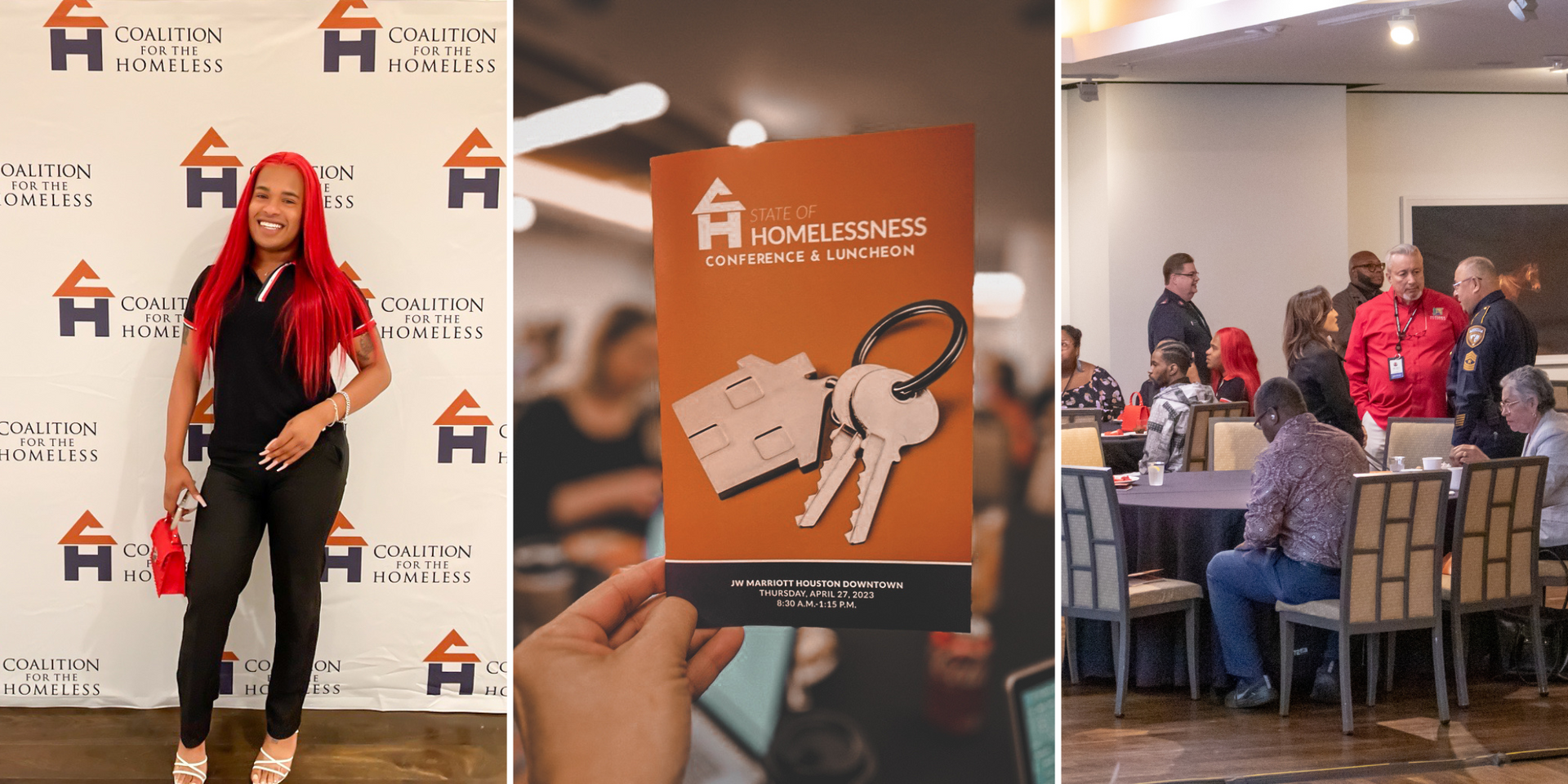
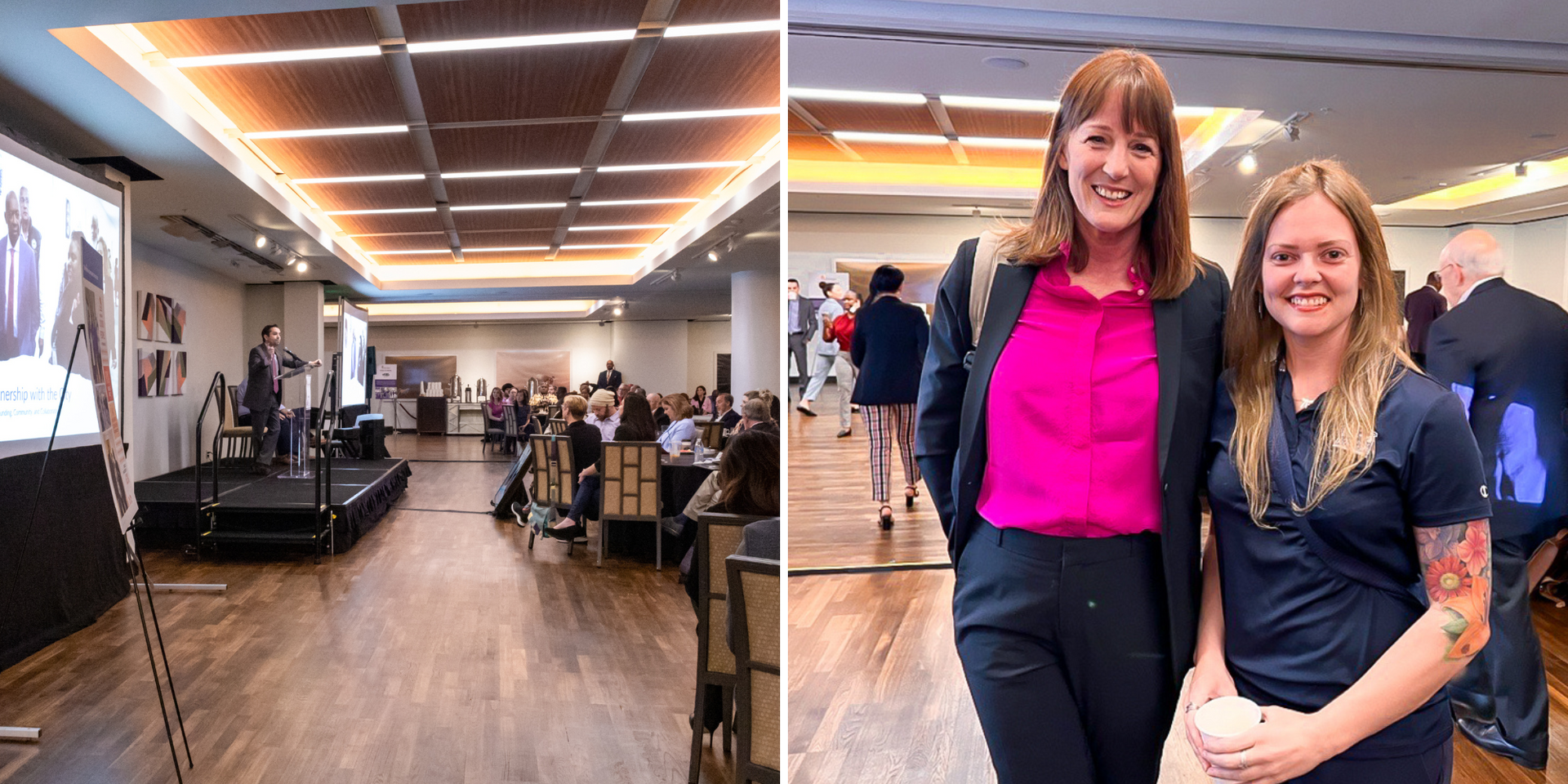
We were proud to host the second annual State of Homelessness on April 27, 2023.
  • Slide title

    Write your caption here
    Button
  • Slide title

    Write your caption here
    Button
  • Slide title

    Write your caption here
    Button
  • Slide title

    Write your caption here
    Button
  • Slide title

    Write your caption here
    Button
  • Slide title

    Write your caption here
    Button
  • Slide title

    Write your caption here
    Button
  • Slide title

    Write your caption here
    Button
  • Slide title

    Write your caption here
    Button
  • Slide title

    Write your caption here
    Button

Our half-day conference brought together partners of The Way Home, community members, and other supporters to hear from local and national experts in solving homelessness. Highlights included talks on the Youth Homelessness Demonstration Program (YHDP), the City’s housing navigation center, and Harris County’s Employ2Empower program; keynote speaker Michael Kimmelman of The New York Times; and a performance from Houston Grand Opera.


Over one hundred people joined us in person, and more than three hundred livestreamed this year's event.


Scroll down to read a recap of each session.

VIEW PROGRAM SLIDE DECK

Opening Remarks

Ashlie Young, our manager of landlord engagement, joined us once again as this year’s Master of Ceremonies. She opened with an original poem she wrote, before passing the mic to our Board Vice Chair Chris Hanslik for opening remarks, who called on others to provide support and get involved in the fight against homelessness.  (Watch opening remarks) 


Click here to watch a special message from Congresswoman Sylvia Garcia

A decade of The Way Home

Thao Costis, interim executive director of the Harris County Community Services Department, kicked things off by reflecting on what the past decade of The Way Home has taught us, particularly in terms of social resources.


When she began her journey in 1992, she worked with other Houston-based resource centers to help those in need, despite having minimal funding. Costis explained that it wasn't until 2011 when, despite a lack of trust in collective efforts and red tape making progress slow, campaigns such as the 100,000 Homes Campaign aimed to make a real impact on homelessness. The development of The Way Home and the Coordinated Access system and the adoption of the Housing First approach also helped Houston to accelerate its progress in helping people experiencing homelessness.


Through her consistent efforts, Thao has learned the power of community and the importance of collaboration: "The Way Home is the answer. By coming together, we can achieve a vision of Houston without homelessness." (Watch this presentation.) 


Employ2Empower

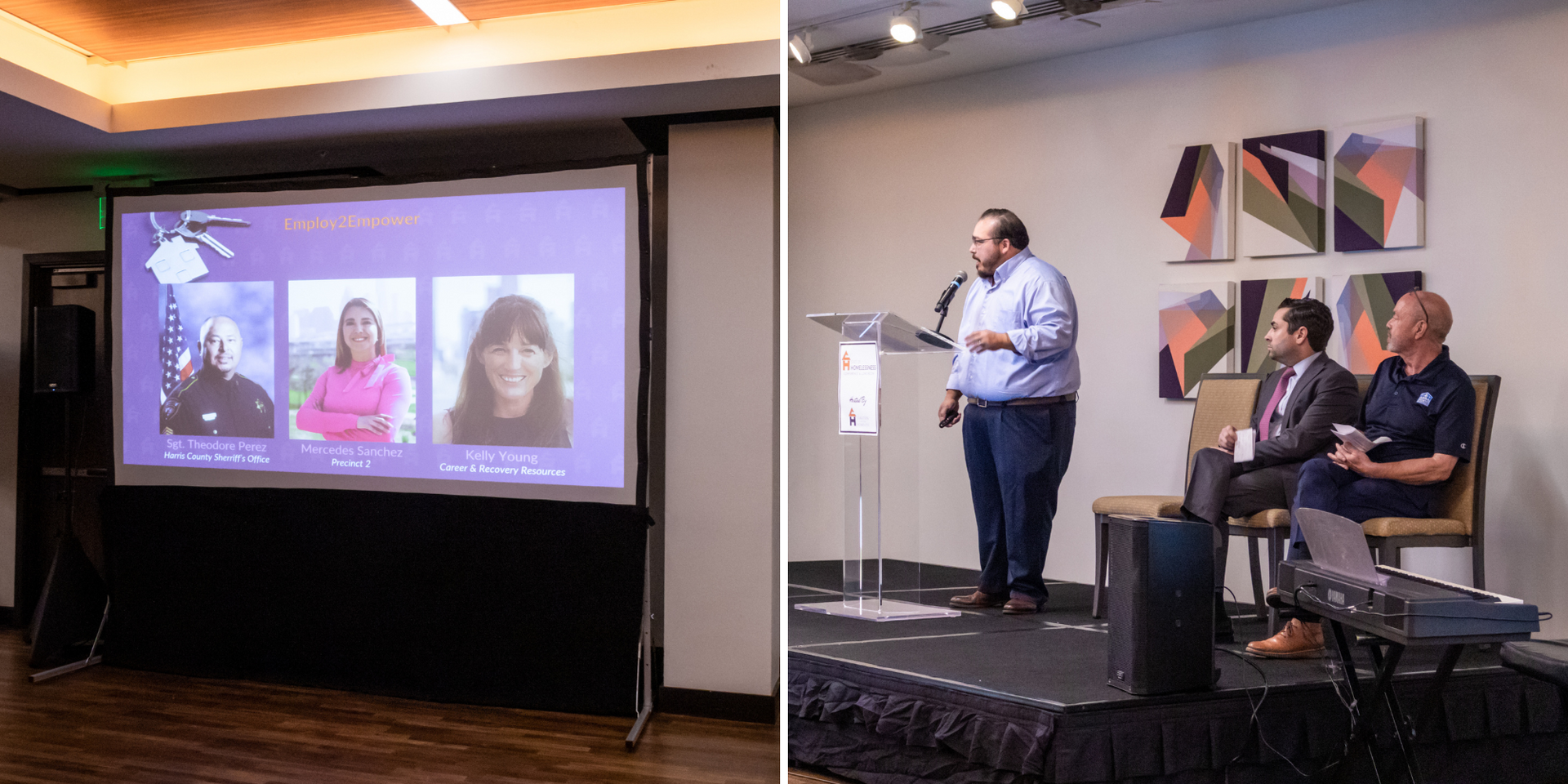
Next, Kelly Young, CEO of Career & Recovery Resources; Mercedes Sanchez, senior director of policy & community relations for of Harris County Precinct 2 Commissioner Adrian Garcia; and Sgt Theodore Perez of the Harris County Sheriff’s Office spoke about Employ2Empower. The program started in Precinct 2 and has since expanded throughout all of Harris County. It provides low-barrier employment opportunities to people experiencing homelessness. 


Mercedes introduced a video explaining that the program has become highly successful due to its partnerships. Prior to the program’s inception, Mercedes did extensive research and found there were services across the county that offered training, but participants weren’t paid. Through her research, they realized the need for programs with a more comprehensive approach. 


Career & Recovery's work in the program aims to connect individuals to available resources. The biggest challenge Kelly has observed is that for most the problem isn't a lack of skills or job training but an inability to secure employment opportunities due to barriers. The program was a humbling experience for Kelly, reflecting the very essence of humanity, she said. 


As a law enforcement officer, Sgt. Perez plays a role in validating the program by liaising with the community while out in the field. But Sgt. Perez was quick to give credit to the deputies and program coordinator who work alongside him, as well as Sheriff Gonzalez and Commissioner Garcia, stating that, "With a team like this, it's no wonder the program is making such a big difference in the lives of so many." (Watch this presentation.) 


Housing Navigation Center

Marc Eichenbaum, special assistant to Mayor Sylvester Turner for homeless initiatives; our Director of Program Operations James Gonzalez; and Preston Witt, COO of Harmony House, then took to the stage to discuss City of Houston’s housing navigation center, a new facility designed to provide people with a consistent, safe, and stable location to stay while they transition from homelessness to housing. 


James emphasized that the navigation center is a beacon of hope for those transitioning from the street into permanent housing and a perfect place to stay for those in need of a safe haven. But James stressed that the facility is more than just place to lay one's head, "It's a community that offers compassion and support during a vulnerable time in one's life, and a stepping stone towards long-term stability and a brighter future." 


Marc explained that while Houston did not invent the idea of a navigation center, our use of City-owned property to bring it closer to the urban core makes Houston's approach unique. Marc reiterated that the center's focus is not to house people, but to be a stop along the way to housing. 


Preston said that prior to the navigation center, housing so many in need seemed daunting, but collaboration with partners led to a solution.  Today, more than 50 people who have stayed at the navigation center since it opened in January have already been successfully housed. Preston attributes this success to the power of collaboration and hard work, while reminding us that this is just the beginning and calling on everyone to continue their efforts and help even more people in need. (Watch this presentation.) 


The Youth Homelessness Demonstration Program (YHDP) Panel was moderated by our own Stefanie Quintela, director of strategic planning. The YHDP is a new initiative to prevent and end youth homelessness in our community. Panelists included Shun Johnson, CEO of TLC Health & Wellness; Joe Fuentes, Chief Transformation Officer of Spring Branch Community Health Center; Youth Action Board Representative Kenny Easley; and Juliet Stipeche, executive director of the Gulf Coast Workforce Board. 


Stefanie kicked off the program by stressing that the life a youth faces on the streets is very different than that of an adult. Kenny explained that the Youth Action Board (YAB) is a group of youth and young adults who have had first-hand experiences with homelessness. They work with organizations to train them on how to help and communicate with youth.  The YAB was heavily involved in the planning of the program, making sure that their voices were heard. Kenny said they appreciated being given a voice and a place to share their experiences. 


Juliet has seen firsthand that education, training, and employment are vital components in preventing and ending homelessness, especially among our youth. Juliet believes in redesigning the system, creating a division focused on education, youth development, and adult literacy, and hopes to focus her efforts on working collaboratively with communities to make a difference in the lives of those affected by homelessness. 


Shun credits funding for her organization's ability to expand its capacity and offer additional services. Prior to the funding, Johnson's organization was limited to case management and advocacy, but added resources allowed them to finally fill in the missing piece: housing.  Working with the YAB has been one of Shun's most rewarding experiences. "The young adults involved are not only committed and present, but they are also honest about their experiences and share what is needed to better serve them,” she told the audience. 


Despite unforeseen challenges, Joe works tirelessly to secure transitional housing for youth in need and engage with landlords and the population at large. Joe said the collaboration between the YAB and partners has been critical throughout the process, giving him and his team the support needed to overcome obstacles and make a real difference in the lives of the youth they serve. (Watch this presentation.) 


Keynote Address

We were so excited to welcome this year’s keynote speaker Michael Kimmelman, author of The New York Times article “How Houston Moved 25,000 People From the Streets into Homes of Their Own," Regarding what prompted his interest in Houston, Kimmelman said that he, "felt all the negative doomsday scrolling stories about homelessness fed into a cycle of pessimism and despair that made people both more hostile to the unhoused and more complacent." 

 
Although it may seem daunting for individuals or organizations to tackle, Michael said he believes that a systemic approach is critical in making progress towards ending homelessness. Reflecting on the impact his article has made, he said, "The public got back a hunger to know more about what works, what is possible, and not just be told that everything is going haywire. Because in the end I believe a majority of us seek common ground and common cause, if we are just given some reason to hope. Houston gives people hope that homelessness is a problem we can tackle together. It shows that if we come together and work towards a common goal and make a meaningful impact on one of society's most intractable problems."
(Watch the keynote.) 


Houston Grand Opera

After the keynote, Jeremy Johnson and Alisa Magallón of Houston Grand Opera (HGO) spoke about their experience learning about homelessness and bringing the new opera Another City to life. Then, singers Cecila Duarte and Alejandro Magallón and pianist Bin Yu Sanford took the stage to perform excerpts from the show.  (Watch this presentation.) 


Closing Remarks

Our Vice President Sara Martinez reflected on her last ten years with the CFTH and the incredible progress Houston has made. "When I think of how we got here, I think of the people in this room and the people watching online who've been selfless, forward-thinking and willing to change the status quo," she said. Looking to the next ten years, Martinez said, "If the last ten years are any indication, I  wouldn’t be surprised to be living in a Houston where homelessness is rare brief and nonrecurring.” (Watch closing remarks.) 

Thank you to everyone who joined us for State of Homelessness 2023. And a very special thank you to our sponsors, CORT, PJS, and Houston Methodist.
By Sara Hart June 12, 2026
Houston, Texas (June 12, 2026) — The Coalition for the Homeless of Houston/Harris County (CFTH) today released the results of the 2026 Point-in-Time Count & Survey as part of the inaugural State of Homelessness in Houston report, a regional effort that combines PIT Count data with additional system indicators to provide a broader understanding of homelessness and system response across Harris, Fort Bend, and Montgomery counties. The report found 3,321 people experiencing homelessness on a single night in February 2026, reflecting relative stability compared to the 2025 Point-in-Time Count of 3,325. At the same time, the data highlights continued challenges related to unsheltered homelessness, economic and housing pressures, and the ongoing need for coordinated regional investment in homeless response and prevention efforts. This year’s report expands beyond the annual Point-in-Time (PIT) Count to include additional indicators generated through the Homeless Management Information System (HMIS) and HUD System Performance Measures (SPMs). Together, these measures provide additional context about year-round interactions with the homeless response system, housing stability outcomes, and inflow into homelessness over time. "The Point-in-Time Count is like a photograph," said Renee Cavazos-Benavides, vice president of the homeless response system at CFTH . "It captures an important moment, but there is always more happening outside the frame. That's why this year's report includes additional indicators that help us understand how people move into homelessness, how they move back into housing, and where we need to focus our efforts as a community." Key findings from the report include: 3,321 people experiencing homelessness during the February 2026 PIT Count 35,988 unique clients served through the homeless response system, The Way Home, during calendar year 2025 2,135 households housed by partners of The Way Home during calendar year 2025 7,110 people entering homelessness for the first time during federal FY25 85% of people who exited homelessness remained stably housed over a two-year period The PIT Count found 2,051 sheltered individuals and 1,270 unsheltered individuals across Harris, Fort Bend, and Montgomery counties. "The additional data shows our system is doing a great job maintaining our progress, in spite of additional economic stressors and pandemic funding having been exhausted,” said Kelly Young, president and CEO of CFTH . “Further progress will depend not only on additional investments in housing and services but also on our ability to expand new interventions to resolve homelessness more quickly." More than half of unsheltered individuals identified during the PIT Count had a matching HMIS record, reflecting ongoing engagement between outreach teams and people experiencing unsheltered homelessness. The findings underscore the continued need for outreach, additional pathways indoors, and sustained local investment to maintain system stability and respond to changing community needs. “The Point-in-Time Count gives our community a chance to pause and check in with people who may not yet be housed, sheltered, or consistently connected to services,” said Dr. Ben King, clinical assistant professor at the University of Houston Tilman J. Fertitta Family College of Medicine . “It helps us capture information that does not always show up in routine system data — including where people are staying, what barriers they are facing, and what they identify as the causes of their homelessness. Used alongside HMIS data, program performance measures, and community input, the PIT Count remains an important tool to answer questions we wouldn't get to ask otherwise." The annual PIT Count is required by the U.S. Department of Housing and Urban Development (HUD) and helps communities measure trends in homelessness over time. However, the PIT Count does not represent the total number of people who experience homelessness throughout the year. The 2026 State of Homelessness in Houston report combines PIT Count data with other key indicators to provide a more complete picture of homelessness across the region. Behind every number is a person, and a better understanding of homelessness helps communities respond more effectively. "The results remind us that homelessness is one of the most complex challenges facing our city. This is why the 419 Emancipation resource living facility is so important. We will continue working with stakeholders to move people off the streets and provide them with assistance, with the goal of reducing homelessness throughout our community and our neighborhoods," said Mayor John Whitmire. “I’m so proud that Harris County has reduced homelessness by more than 16% between 2018 and 2026, even when most other communities have seen homelessness skyrocket. We’re tackling the issue from both ends: we’re investing in programs to prevent poverty and promote economic mobility, and we’re also prioritizing safe and stable housing for those experiencing homelessness. Our community is only as successful as our most vulnerable residents, and I want to thank the Coalition for the Homeless, The Way Home, and all of our other local partners who have helped turn Harris County into a national model for reducing homelessness,” said Harris County Judge Lina Hidalgo. "The 2026 Point-in-Time Count confirms that our region has remained stable while homelessness has increased in many other parts of the country. However, stability is not enough when over a thousand of our neighbors are still sleeping outside. I’m grateful to the Coalition for the Homeless, The Way Home, outreach teams, law enforcement, service providers, and volunteers for showing that a coordinated local approach can help move people from crisis toward housing,” said Harris County Precinct 2 Commissioner Adrian Garcia . “As a former street cop and sheriff, I know we do not solve homelessness by simply moving people from one place to another. We solve it by treating people with dignity, connecting them to services, and creating real pathways to housing. I remain committed to working with our partners to prevent homelessness, support our veterans and most vulnerable residents, and make homelessness rare, brief, and nonrecurring in Harris County." “Harris County’s stability in the Point‑in‑Time Count stands out against the sharp increase in homelessness seen nationwide since the pandemic,” said Harris County Precinct 4 Commissioner Lesley Briones . “These results reflect years of continued investment in strengthening partnerships and expanding critical services, including two new emergency shelters for survivors of domestic violence. We know there is much more work ahead, and I remain committed to working alongside our partners to prevent and ultimately end homelessness in our community.” “Even with limited new funding and few new programs launched during this reporting period, Houston has remained relatively stable. What this latest data underscores is the need to continue investing in service-connected solutions like 419 Emancipation,” said Mike Nichols, Director of the City of Houston Housing and Community Development Department . “Now that 419 is operational, we are optimistic this triage, transition, and treatment model will help connect more individuals to care, services, and clear pathways toward stability. Behind every number is a real person, and our goal is to ensure more Houstonians are connected to the right support and a stronger path forward.” The full report and methodology appendix are available online here. The executive summary is available online here. The State of Homelessness report is available online here. For more information about the PIT Count and The Way Home homeless response system, visit www.cfthhouston.org. For more information and for results of previous years’ counts, please click here . For photos and B roll of volunteers conducting this year’s PIT Count, click here . ### The Coalition for the Homeless of Houston/Harris County (CFTH) is the backbone of Houston’s solutions to homelessness. It’s a nonprofit organization that uses the power of collective impact to move people experiencing homelessness into housing solutions. Learn more at www.cfthhouston.org . The Way Home is the homeless response system for Houston and Harris, Fort Bend, and Montgomery counties. It’s a public-private partnership — a network of dozens of homeless service providers and other government, philanthropic, and business partners. The Coalition for the Homeless of Houston/Harris County (CFTH), a 501c3, is the designated coordinator of The Way Home.
By Sara Hart May 15, 2026
Every year, Houston’s Point-in-Time (PIT) Count helps provide a snapshot of homelessness across the region. But as speakers emphasized during CFTH Presents: The PIT Count — Behind the Numbers , no single number can fully explain homelessness, or the work required to address it. Hosted by the Coalition for the Homeless of Houston/Harris County (CFTH), the discussion brought together leaders from outreach, data systems, and public health to explore how Houston measures homelessness, why the PIT Count matters, and how year-round data helps guide the region’s homelessness response system.
By Catherine Villarreal February 24, 2026
Houston, Texas (February 24, 2026) – This week, the nonprofit Coalition for the Homeless of Houston/Harris County (CFTH) is leading the annual Point-in-Time Homeless Count & Survey (“PIT Count”) to determine the number of people experiencing homelessness across Houston and throughout Harris, Fort Bend, and Montgomery counties. “We may see a slight uptick in the number this year, but we have a plan,” said Kelly Young, President & CEO of CFTH. “With the support of the City of Houston, Harris County, and private funders, we have been piloting new interventions to shorten the length of time people in our region experience homelessness. With adequate funding, we look forward to expanding those interventions to help people regain lives of self-determination.” CFTH coordinates the Houston region’s public-private homeless response system, The Way Home . Through this collaboration, The Way Home partners have successfully housed over 36,000 people since 2012. CFTH will release the results of Houston’s 2026 PIT Count in the summer, following independent verification by an epidemiologist. These findings will provide insight into how factors such as increases in the cost of living and the end of federal pandemic relief funding have impacted homelessness in our region. More information about the 2026 Point-in-Time Homeless Count & Survey The PIT Count offers a snapshot of how many people are experiencing homelessness in our region on a single night. This year, the “night of record” is Monday, Feb. 23. CFTH determines the number of people staying in shelters on that night by pulling records electronically from the Homeless Management Information System (HMIS) . The unsheltered count will be conducted on the following days, from Tuesday, Feb. 24 to Thursday, Feb. 26. More than 400 volunteers and staff of local nonprofit service provider partners will canvass the three-county region to survey people living unsheltered, using an app on their mobile devices. Results from the 2026 PIT Count will help gauge the progress of The Way Home’s ongoing collaborative efforts. It will also help CFTH and partner homeless outreach teams understand geographic shifts and target their outreach throughout the year. The PIT Count illuminates specific programmatic gaps and provides additional information needed to allocate resources most efficiently. The PIT Count is a requirement of the U.S. Department of Housing & Urban Development (HUD) for the annual Continuum of Care (CoC) funding process. HUD furnishes the majority of funding for programs that provide housing and supportive services to people experiencing homelessness in the region. In 2024, HUD granted more than $71 million to the Houston area.
Show More