Fewer people are experiencing homelessness in Houston
Communications Admin • June 12, 2013
However, more than 6,300 people need a stable home
Houston has seen a 29% drop in the homeless population both sheltered and unsheltered since 2011, stated Marilyn L. Brown, President & CEO of the Coalition for the Homeless of Houston and Harris County. And while that drop is something to celebrate, there were more than 6,300 people that were homeless during the evening of the 2013 Point-in-Time Homeless Count conducted under the auspices of the Coalition on January 29, 2013. The PIT Count is a federal requirement for all communities receiving funding from the Department of Housing and Urban Development (HUD). The reason for this decline, said Brown, is that area homeless service providers are working collaboratively to help homeless individuals and families move into stable, permanent housing.
“Across the nation, homeless service providers have been charged by the federal government to move people from the streets and shelters into a housing environment tailored to their needs” said Brown. “Some individuals and families just need rent assistance, while others who are chronically homeless may need permanent housing that includes support such as help taking prescribed medication regularly or substance abuse counseling to prevent a return to homelessness.”
By federal definition, someone is considered chronically homeless if they experience four or more episodes of homelessness within a three-year period or one or more current consecutive years of homelessness. In addition, the individual must have a disabling condition that makes daily activities difficult, such as a medical or psychological condition or a substance abuse problem.
Houston area housing initiatives include Housing Houston’s Heroes, which has housed 557 homeless individuals and families, including 488 homeless veterans in the past year. Other efforts include joining the 100,000 Homes National Campaign, which helps identify and house chronically homeless individuals nationwide. In Houston, there are between 1500 and 2000 chronically homeless individuals.
Some Causes of Homelessness
Homelessness is a complex issue and effective efforts to prevent it require broad community participation. Triggers that may lead to homelessness include job loss, eviction, bills higher than earnings, domestic abuse, incarceration, mental and/or physical illness, drug and alcohol abuse or changes in family status.
YouthCount!
As part of a nine-city pilot program, the greater Houston area PIT 2013 Homeless Count focused on a specific subpopulation, emancipated youth under 24 years of age, entitled YouthCount! Data was collected by canvassing areas where teens and young adults congregate, along with a survey given to students thought to be homeless in area school districts. The results revealed that more than 160 youth were homeless and that the majority of these children were living doubled up with family members in apartments. Two out of five of these youth had experience with foster care, and many had “aged” out of the foster care system leading to their homelessness. One issue that has been identified is that there is a lack of housing for youth less than 18 years of age in this community.
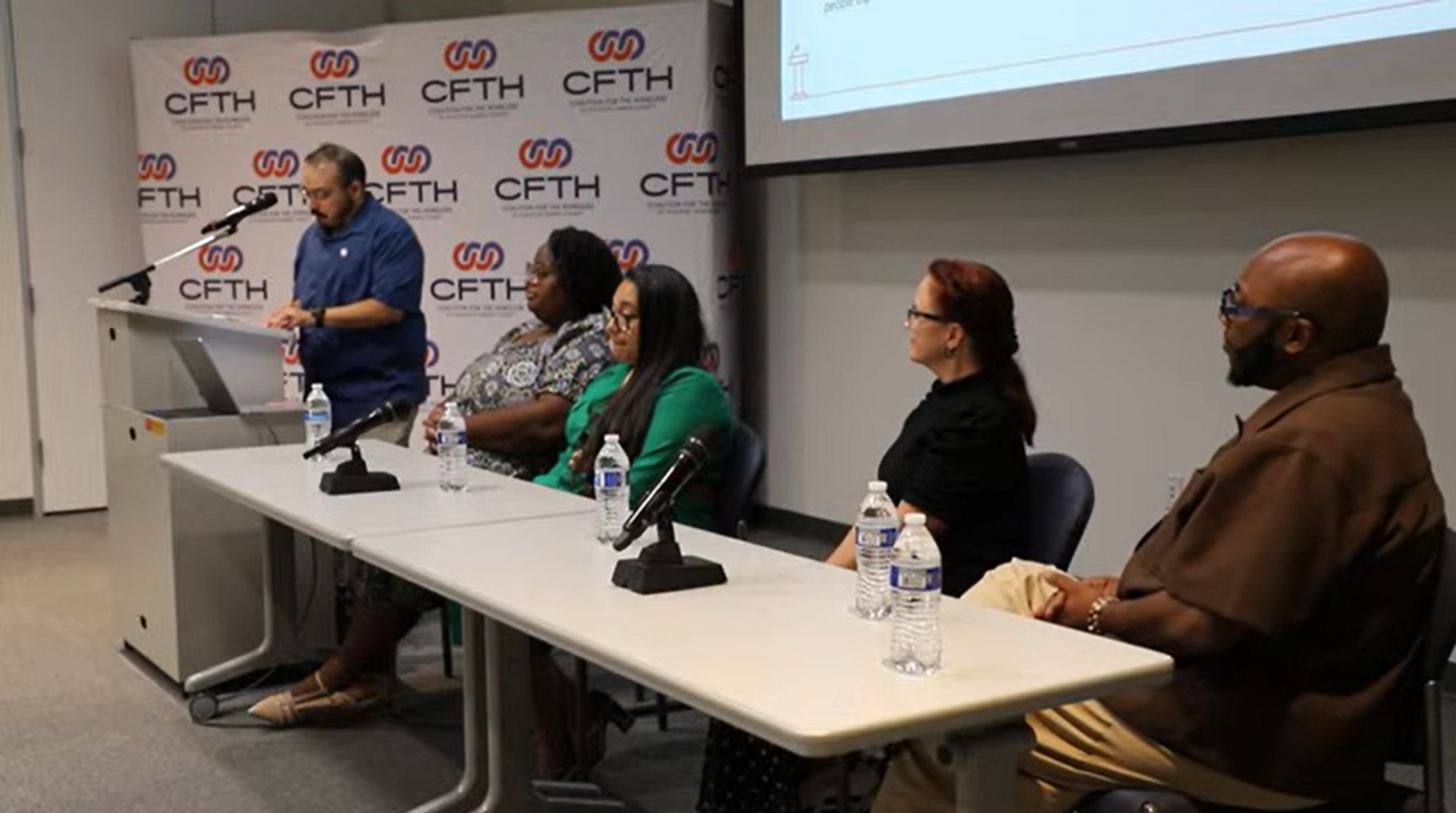
When someone experiences homelessness, the right solution is not always a long-term housing program. Sometimes a person needs help replacing an ID, reconnecting with family, finding an affordable shared home or overcoming another immediate barrier. That idea guided CFTH Presents: Building Better Pathways — Creating Faster Routes to Stability . The Coalition for the Homeless of Houston/Harris County (CFTH) hosted the discussion with leaders who oversee and carry out Rapid Resolutions across The Way Home, the Houston region’s homeless response system.

When most people think about homelessness, they picture someone sleeping outside or staying in a shelter. But homelessness often begins much earlier. A new survey from Rice University's Kinder Institute estimates that more than 140,000 adults across Harris, Fort Bend and Montgomery counties experienced temporary homelessness during the past year. Many of these individuals never slept outside. They stayed with friends or family because they had nowhere else to go, paid for motel rooms when they could, slept in their vehicles or found other temporary ways to get by. For those of us working in Houston's homeless response system, the estimate did not come as a surprise. What stands out is the scale. Our 2026 State of Homelessness report found that nearly 36,000 people interacted with The Way Home, Houston's regional homeless response system, during 2025. The Kinder estimate shows a much larger group of households struggling before they ever reach organizations like ours. Those numbers do not compete with one another. They tell the story of different points along the same continuum. By the time someone decides whether to enter a shelter or sleep outside, opportunities to prevent homelessness have often passed. The homeless response system helps people regain stability after they are in a shelter or on the street. Prevention happens months earlier, while people are still trying to hold on to their housing. Most people do not ask for help at the first sign of trouble. They work extra hours. They borrow money from family. They juggle bills. They hope next month's paycheck will solve this month's problem. Like most of us would, they try to solve the problem themselves. By the time they reach out, they often need far more help than they would have needed just a few months earlier. That is why Houston's prevention network is so important. Organizations like United Way of Greater Houston connect residents with rental assistance, utility assistance, benefits navigation and other resources that help stabilize households before they lose their housing. If you are struggling to keep up with rent, utilities or other essential expenses, do not wait until you have exhausted every option. Reaching out early gives providers more opportunities to help and gives families more options to stay housed. The Kinder research also reinforces another reality facing our region: We need more affordable housing. More than 140,000 adults experienced temporary homelessness in a single year because too many households live one unexpected expense away from losing their housing. That number points to a much larger population searching for homes they can afford long before they need homeless services. Houston's homeless response system continues to produce strong outcomes. More than 2,100 households moved into permanent housing during 2025, and 85% of those who exited homelessness two years ago remain housed today. At the same time, more than 7,100 people slept in shelters or on the street for the first time in 2025. Those numbers show that while our homeless response system continues to help thousands of people regain stability, new households continue to enter homelessness every day. The Kinder research gives Houston something we have not had before: a clearer picture of the households struggling before homelessness becomes visible. The Way Home will always play a critical role in helping people regain stability, but we also need to help more people before they ever need those services. That means strengthening prevention programs, expanding affordable housing and making it easier for people to ask for help early. Houston has repeatedly shown that when our community understands a challenge, it comes together to solve it. This research gives us a better understanding of where the next challenge begins.

Extreme Heat Is America's Deadliest Weather Hazard. Find Trusted Resources to Stay Safe and Help Others.