A letter from our President/CEO
Communications Admin • January 2, 2020

Dear Friends,
As we begin 2020, I wanted to take time to reflect on my first year with the Coalition for the Homeless.
I joined the Coalition last January, excited to bring a business perspective to the work of solving homelessness. I strongly believe that the programs and resources exist to solve homelessness in our community – we just need to coordinate more effectively and efficiently.
I was quickly impressed by the level of collaboration already underway in Harris, Fort Bend and Montgomery counties. More than 100 partners have been working together through The Way Home since 2012 with meaningful results: more than 18,000 people have been housed with an 84% success rate. The Coalition is fortunate to work with outstanding partners and I’ve enjoyed getting to know them better over the last 12 months.
I also learned a great deal about the unique role that the Coalition plays in the community. As a financial and management intermediary, the Coalition plays a valuable role as the conductor of the local homeless response system symphony. Just like a symphony has musicians and instruments, the Houston region has wonderful nonprofits, funders, and programs working directly with those experiencing homelessness.
However, the Coalition plays an essential role as the coordinator and convener, leading the collaboration and planning, and developing and directing funding and resources that make Houston so successful at solving homelessness.
Over the last year I’ve been fortunate to work with a very talented team of individuals at the Coalition who work tirelessly every day to implement homelessness solutions. Both they and our Board of Directors have worked beside me to improve the organization’s financial stability and implement a new operating model to ensure that we are being as effective and efficient as possible.
In November, the Board removed “Interim” from my title and named me President/CEO. I am thrilled to continue working with the Coalition and some of our priorities for the coming year include:
- continuing to develop staff talent,
- growing in the areas of public advocacy and communications,
- aggressively exploring sustainable areas of funding for our local homeless response system, from healthcare groups, pay for success programs, and others,
- developing new programs for those experiencing homelessness who have serious mental illness and/or substance abuse disorders and need higher levels of care, and
- ensuring the financial and funding sustainability of the Coalition.
I believe that Houston could be the first major city in the US to solve homelessness. We are a one-of-a-kind place with a yes-we-can spirit. I also believe that the success of our local homeless response system is dependent upon the success of the Coalition.
We can achieve our vision of a Houston region where homelessness is rare, brief, and non-recurring. I look forward to working with you to get us there.
Sincerely,
Michael C. Nichols
President/CEO
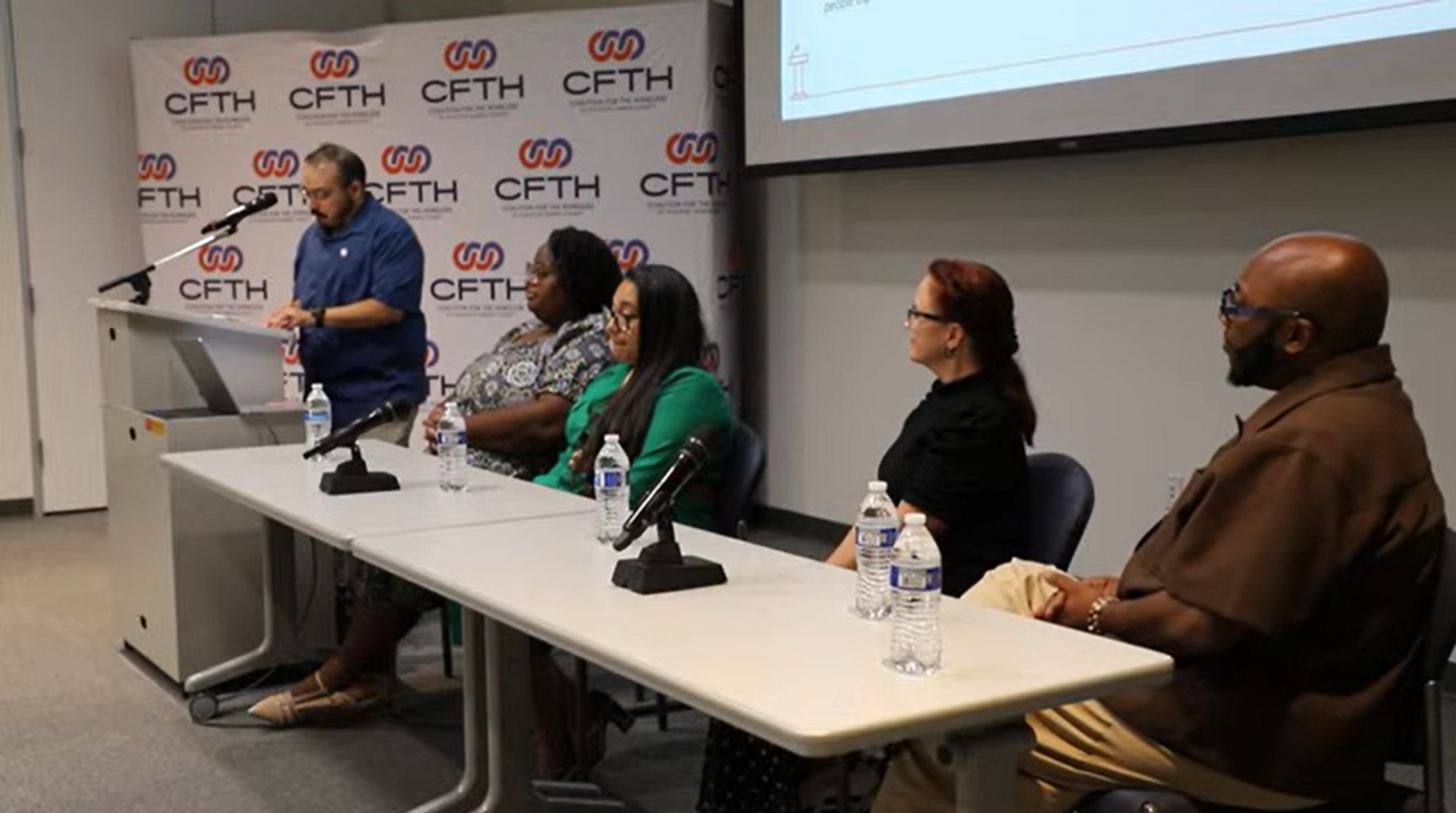
When someone experiences homelessness, the right solution is not always a long-term housing program. Sometimes a person needs help replacing an ID, reconnecting with family, finding an affordable shared home or overcoming another immediate barrier. That idea guided CFTH Presents: Building Better Pathways — Creating Faster Routes to Stability . The Coalition for the Homeless of Houston/Harris County (CFTH) hosted the discussion with leaders who oversee and carry out Rapid Resolutions across The Way Home, the Houston region’s homeless response system.

When most people think about homelessness, they picture someone sleeping outside or staying in a shelter. But homelessness often begins much earlier. A new survey from Rice University's Kinder Institute estimates that more than 140,000 adults across Harris, Fort Bend and Montgomery counties experienced temporary homelessness during the past year. Many of these individuals never slept outside. They stayed with friends or family because they had nowhere else to go, paid for motel rooms when they could, slept in their vehicles or found other temporary ways to get by. For those of us working in Houston's homeless response system, the estimate did not come as a surprise. What stands out is the scale. Our 2026 State of Homelessness report found that nearly 36,000 people interacted with The Way Home, Houston's regional homeless response system, during 2025. The Kinder estimate shows a much larger group of households struggling before they ever reach organizations like ours. Those numbers do not compete with one another. They tell the story of different points along the same continuum. By the time someone decides whether to enter a shelter or sleep outside, opportunities to prevent homelessness have often passed. The homeless response system helps people regain stability after they are in a shelter or on the street. Prevention happens months earlier, while people are still trying to hold on to their housing. Most people do not ask for help at the first sign of trouble. They work extra hours. They borrow money from family. They juggle bills. They hope next month's paycheck will solve this month's problem. Like most of us would, they try to solve the problem themselves. By the time they reach out, they often need far more help than they would have needed just a few months earlier. That is why Houston's prevention network is so important. Organizations like United Way of Greater Houston connect residents with rental assistance, utility assistance, benefits navigation and other resources that help stabilize households before they lose their housing. If you are struggling to keep up with rent, utilities or other essential expenses, do not wait until you have exhausted every option. Reaching out early gives providers more opportunities to help and gives families more options to stay housed. The Kinder research also reinforces another reality facing our region: We need more affordable housing. More than 140,000 adults experienced temporary homelessness in a single year because too many households live one unexpected expense away from losing their housing. That number points to a much larger population searching for homes they can afford long before they need homeless services. Houston's homeless response system continues to produce strong outcomes. More than 2,100 households moved into permanent housing during 2025, and 85% of those who exited homelessness two years ago remain housed today. At the same time, more than 7,100 people slept in shelters or on the street for the first time in 2025. Those numbers show that while our homeless response system continues to help thousands of people regain stability, new households continue to enter homelessness every day. The Kinder research gives Houston something we have not had before: a clearer picture of the households struggling before homelessness becomes visible. The Way Home will always play a critical role in helping people regain stability, but we also need to help more people before they ever need those services. That means strengthening prevention programs, expanding affordable housing and making it easier for people to ask for help early. Houston has repeatedly shown that when our community understands a challenge, it comes together to solve it. This research gives us a better understanding of where the next challenge begins.

Extreme Heat Is America's Deadliest Weather Hazard. Find Trusted Resources to Stay Safe and Help Others.