Hawaii Delegation Visits Houston to Learn from “Exemplary” Homeless Response System
Communications Admin • June 12, 2017
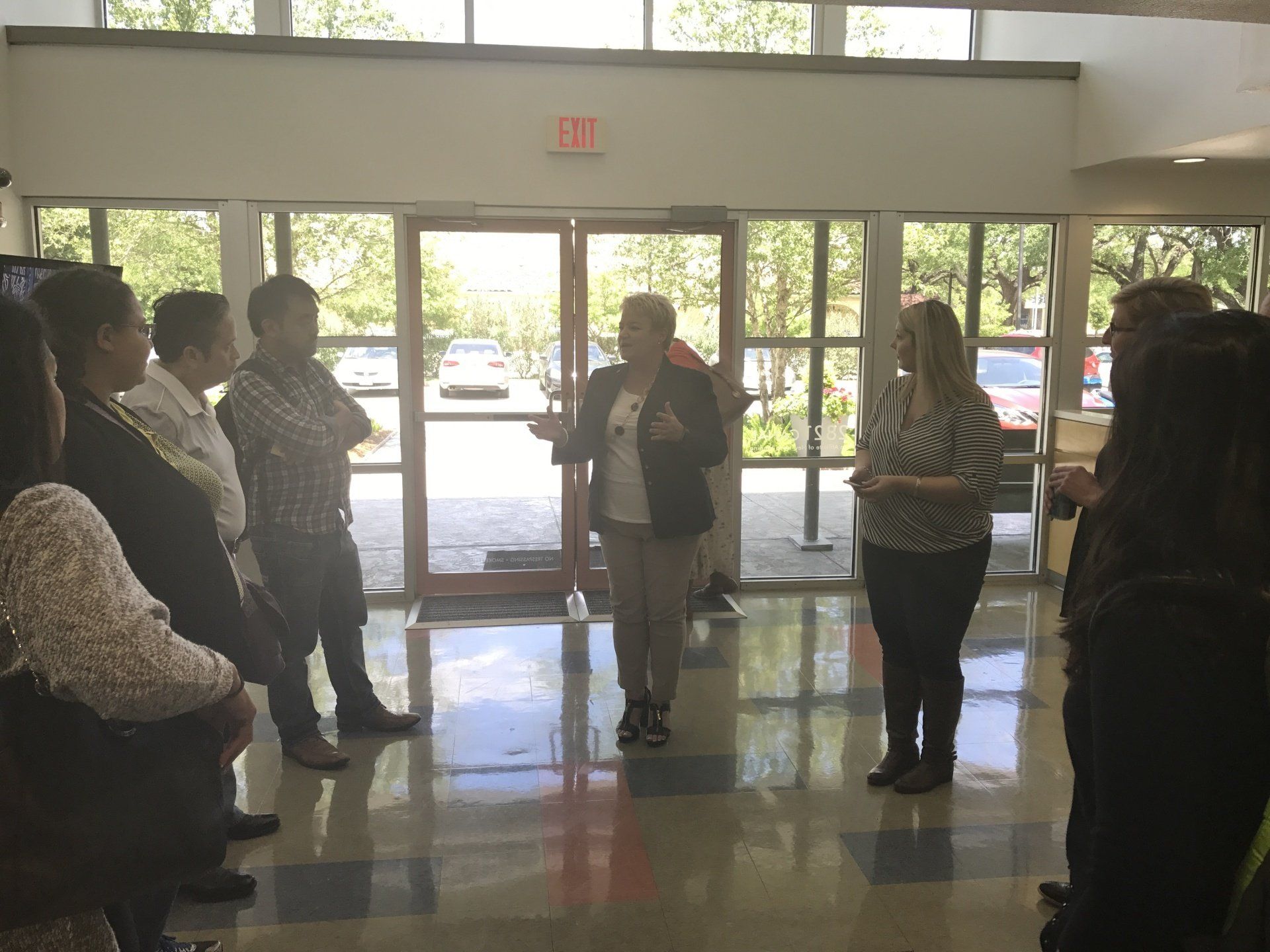
On May 16 and 17, a delegation from Hawaii visited Houston to meet with the Coalition for the Homeless and other partners of The Way Home
to learn more about effective leadership strategies in the effort to solve homelessness.
Last year Hawaii declared a state of emergency around homelessness according to the National Governors Association(NGA), which has been providing Technical Assistance to Hawaii. Although that status has been lifted, the state is still working to revamp its homeless response system.
The group from Hawaii included Marc Alexander (City and County of Honolulu, Office of Housing), Brandee Menino (Hope Services Hawaii, Inc.), Scott Morishige (office of the Governor, Hawaii), and Natalie Okeson (Phocused). Flora Arabo and Akeiisa Coleman, Senior Policy Analysts with the NGA also traveled with the delegation. When the group was asked about what they hoped to learn, Brandee Menino (CEO, Hope Services Hawaii) shared that she wanted to learn more from the Coalition about governance, sustainability, and a better way to build capacity for the homeless service providers in Hawaii.
The Coalition for the Homeless serves as lead agency for The Way Home, the collaborative model to prevent and end homelessness in Houston, Pasadena, Conroe; and Harris, Fort Bend, and Montgomery Counties. Comprising more than 100 partners from the nonprofit, government, and private sectors, The Way Home is leading the nation in reducing homelessness through a Housing First approach: placing homeless individuals and families into permanent housing as quickly as possible and then providing them with the supportive services they need to remain stably housed.
The Coalition provides leadership to The Way Home by providing staffing for workgroup and other committee meetings, working on coordination and implementation of programs and services, acting as the collaborative applicant for the annual Continuum of Care (CoC)
funding process, and by facilitating trainings, education, and Technical Assistance for direct service providers so they can increase their capacity and serve more homeless individuals in the most effective way possible.
In the Houston area, The Way Home is the local CoC. Throughout the United States, CoCs are often regional and centered around major metropolitan areas. Rural areas of each state are consolidated into what are known as “Balance of State CoCs.” The state of Hawaii has to CoCs: Partners in Care, which is the alliance leading Oahu’s CoC; and Bridging the Gap, which provides leadership to the rural counties and small islands.
On the first afternoon of the trip, the group toured two local Permanent Supportive Housing sites: New Hope Housing's Canal Street Apartments, and The Women’s Home's Adele and Ber Piper Family Place. While there, the group learned more about what goes into running a successful housing program Staff from both organizations shared information on a broad range of topics, from the planning and building process to daily operations and supporting success in permanent housing.
The second day focused on panel discussions with Coalition staff, members of The Way Home’s Steering Committee, and partner organizations including: City of Houston Housing and Community Development Department, CSH, Harris County Community Services Department, and more.
NGA, which funded this trip as part of their Technical Assistance, shared, “Houston is considered a model homeless response system across the country; with strong data systems and governance, as well as systems that spend dollars as effectively as possible. The NGA funded this trip to Houston so key team members from Hawaii could meet their Houston counterparts and get a hands-on look at how to operate an exemplary Continuum of Care.”
The work that the Coalition for the Homeless has led and worked on with more than 100 local partners has been incredibly successful. Sharing best practices with other regions like Hawaii can help solve homelessness not just locally but across the country – which is the ultimate goal.
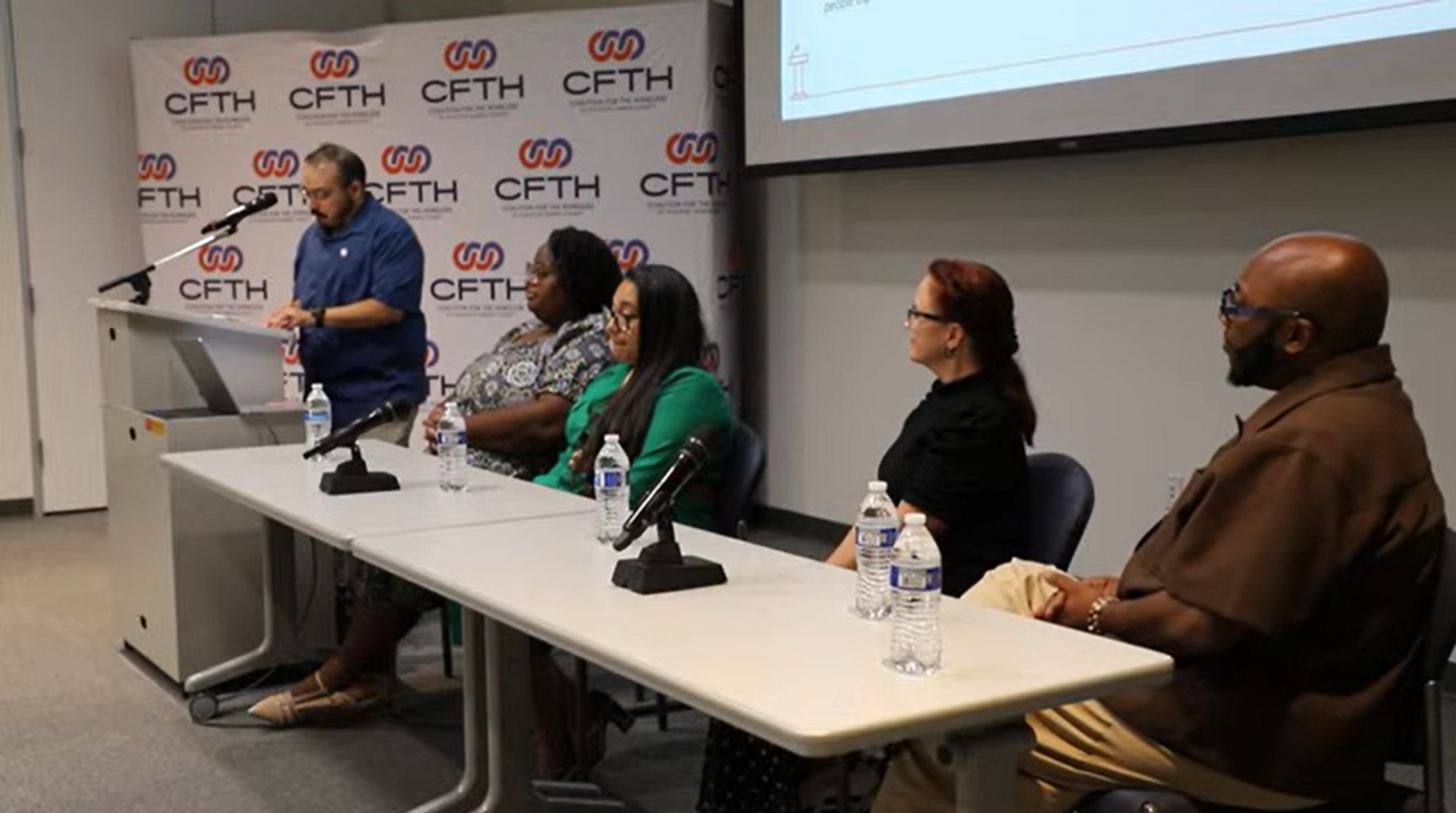
When someone experiences homelessness, the right solution is not always a long-term housing program. Sometimes a person needs help replacing an ID, reconnecting with family, finding an affordable shared home or overcoming another immediate barrier. That idea guided CFTH Presents: Building Better Pathways — Creating Faster Routes to Stability . The Coalition for the Homeless of Houston/Harris County (CFTH) hosted the discussion with leaders who oversee and carry out Rapid Resolutions across The Way Home, the Houston region’s homeless response system.

When most people think about homelessness, they picture someone sleeping outside or staying in a shelter. But homelessness often begins much earlier. A new survey from Rice University's Kinder Institute estimates that more than 140,000 adults across Harris, Fort Bend and Montgomery counties experienced temporary homelessness during the past year. Many of these individuals never slept outside. They stayed with friends or family because they had nowhere else to go, paid for motel rooms when they could, slept in their vehicles or found other temporary ways to get by. For those of us working in Houston's homeless response system, the estimate did not come as a surprise. What stands out is the scale. Our 2026 State of Homelessness report found that nearly 36,000 people interacted with The Way Home, Houston's regional homeless response system, during 2025. The Kinder estimate shows a much larger group of households struggling before they ever reach organizations like ours. Those numbers do not compete with one another. They tell the story of different points along the same continuum. By the time someone decides whether to enter a shelter or sleep outside, opportunities to prevent homelessness have often passed. The homeless response system helps people regain stability after they are in a shelter or on the street. Prevention happens months earlier, while people are still trying to hold on to their housing. Most people do not ask for help at the first sign of trouble. They work extra hours. They borrow money from family. They juggle bills. They hope next month's paycheck will solve this month's problem. Like most of us would, they try to solve the problem themselves. By the time they reach out, they often need far more help than they would have needed just a few months earlier. That is why Houston's prevention network is so important. Organizations like United Way of Greater Houston connect residents with rental assistance, utility assistance, benefits navigation and other resources that help stabilize households before they lose their housing. If you are struggling to keep up with rent, utilities or other essential expenses, do not wait until you have exhausted every option. Reaching out early gives providers more opportunities to help and gives families more options to stay housed. The Kinder research also reinforces another reality facing our region: We need more affordable housing. More than 140,000 adults experienced temporary homelessness in a single year because too many households live one unexpected expense away from losing their housing. That number points to a much larger population searching for homes they can afford long before they need homeless services. Houston's homeless response system continues to produce strong outcomes. More than 2,100 households moved into permanent housing during 2025, and 85% of those who exited homelessness two years ago remain housed today. At the same time, more than 7,100 people slept in shelters or on the street for the first time in 2025. Those numbers show that while our homeless response system continues to help thousands of people regain stability, new households continue to enter homelessness every day. The Kinder research gives Houston something we have not had before: a clearer picture of the households struggling before homelessness becomes visible. The Way Home will always play a critical role in helping people regain stability, but we also need to help more people before they ever need those services. That means strengthening prevention programs, expanding affordable housing and making it easier for people to ask for help early. Houston has repeatedly shown that when our community understands a challenge, it comes together to solve it. This research gives us a better understanding of where the next challenge begins.

Extreme Heat Is America's Deadliest Weather Hazard. Find Trusted Resources to Stay Safe and Help Others.