Coalition for the Homeless Celebrates 7th Anniversary of Homeless court
Communications Admin • February 15, 2013
Coalition for the Homeless of Houston and Harris County celebrates 7 years of its impactful program, Homeless Court (HC), which assists homeless defendants who wish to resolve outstanding misdemeanor offenses and warrants. Held during special sessions within the City of Houston Municipal Court, the program was modeled on the first homeless court program launched in San Diego in 1989. Homeless Court works to resolve the problems that homelessness presents such as being cited for loitering outside of a convenience store; or sleeping in a public park. HC builds on partnerships between the court, local shelters and service agencies. Learn more about this innovative program here.
“As Director and Presiding Judge for the City of Houston Municipal Courts, I am not only grateful for the partnership with the Coalition for the Homeless, but also for the invaluable service we provide to the homeless of our community.” said Judge Barbara Hartle. “The goal of the City of Houston Municipal Courts Homeless Dockets is to remove legal barriers for defendants who are homeless and who have not been able to renew or obtain a Texas Drivers License or Identification Card due to outstanding tickets/citations. Obtaining a Driver’s License/Identification Card enables homeless individuals to seek employment and housing. This is accomplished by a combined effort of our Court staff and the Coalition, who offer alternative solutions including community service hours, to resolve outstanding municipal fines and fees.”
“The Coalition created the Houston version of Homeless Court because of the huge outcry for the program from our service providers,” said Marilyn L. Brown, President and Chief Executive Officer of the Coalition. “The offenses occurred due to the client’s homelessness. Once they got off the street and into a program at a service provider, these defendants began taking steps to resolve their problems. A hearing at a special court session was an opportunity for many to resolve these minor offenses and begin again with a clean slate.”
Homeless service agencies provide programs to clients that address issues such as recovery, education, employment, healthcare and housing. Upon successful participation in a program, a participant will be referred through case management to HC. A judge reviews the submitted proof of program participation, reviews the defendants’ offenses and then sentences the individual. Most often the judge assigns said defendant to community service at the homeless service provider where they are currently residing. The philosophy of the program is rehabilitative rather than punitive. It gives people a chance to better themselves while at the same time resolving a criminal matter.
Stephanie, a former resident of St. Joseph House, has a story that demonstrates how effective this program is for homeless people. St. Joseph House serves people with mental illness. Stephanie used METRO Light Rail as transportation to a doctor’s appointment. She lacked the fare for the trip back to shelter and was cited for “Riding Public Transportation Without Fare” by a METRO police officer. She returned to the shelter distraught because she was in the process of interviewing for several jobs and replacing her State I.D. With the support of the St. Joseph Home case manager, she appeared in Homeless Court and had her ticket and Failure to Appear warrant dismissed. Today she is the receptionist for a prominent Houston-based law firm and has her own apartment.
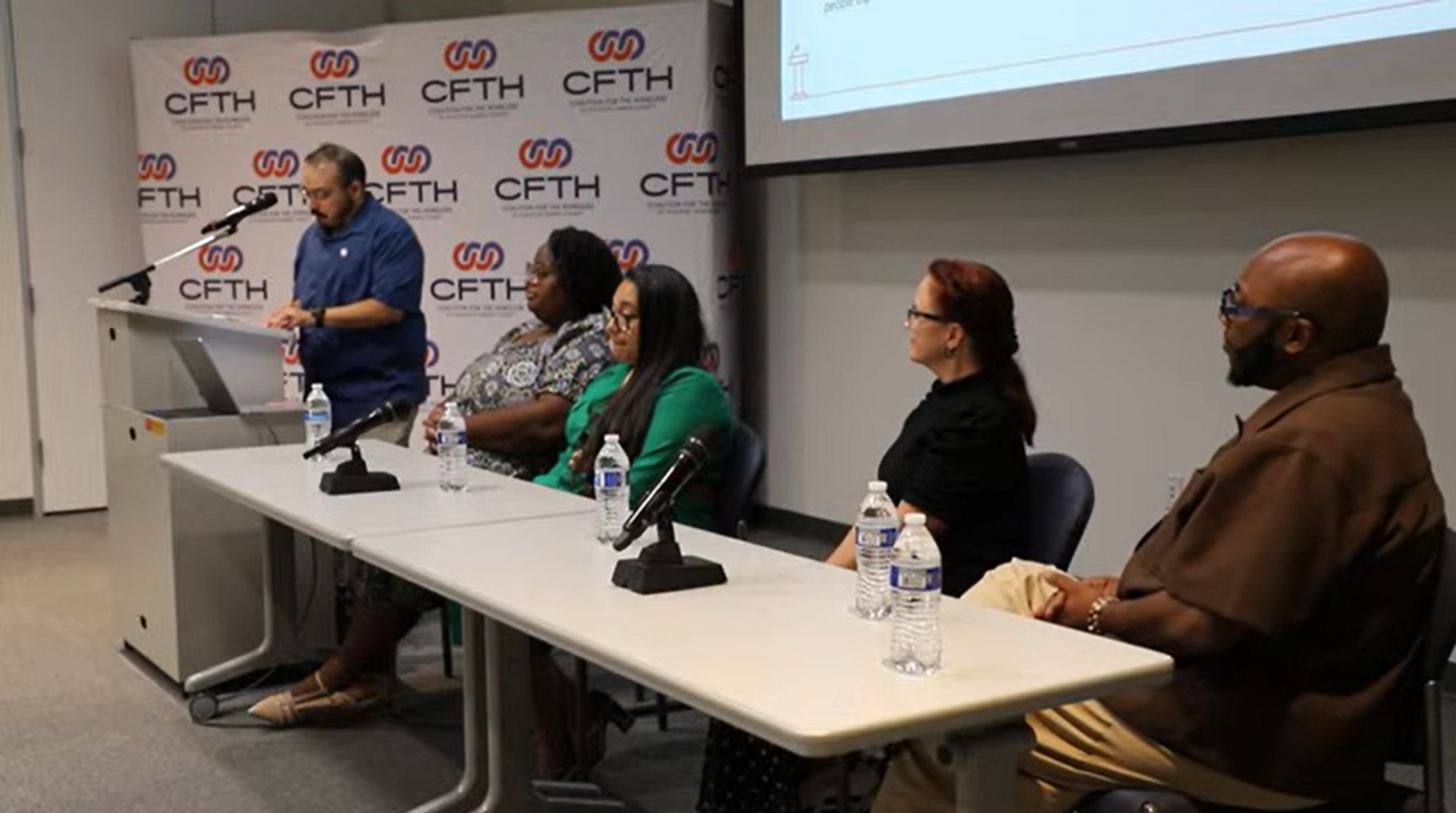
When someone experiences homelessness, the right solution is not always a long-term housing program. Sometimes a person needs help replacing an ID, reconnecting with family, finding an affordable shared home or overcoming another immediate barrier. That idea guided CFTH Presents: Building Better Pathways — Creating Faster Routes to Stability . The Coalition for the Homeless of Houston/Harris County (CFTH) hosted the discussion with leaders who oversee and carry out Rapid Resolutions across The Way Home, the Houston region’s homeless response system.

When most people think about homelessness, they picture someone sleeping outside or staying in a shelter. But homelessness often begins much earlier. A new survey from Rice University's Kinder Institute estimates that more than 140,000 adults across Harris, Fort Bend and Montgomery counties experienced temporary homelessness during the past year. Many of these individuals never slept outside. They stayed with friends or family because they had nowhere else to go, paid for motel rooms when they could, slept in their vehicles or found other temporary ways to get by. For those of us working in Houston's homeless response system, the estimate did not come as a surprise. What stands out is the scale. Our 2026 State of Homelessness report found that nearly 36,000 people interacted with The Way Home, Houston's regional homeless response system, during 2025. The Kinder estimate shows a much larger group of households struggling before they ever reach organizations like ours. Those numbers do not compete with one another. They tell the story of different points along the same continuum. By the time someone decides whether to enter a shelter or sleep outside, opportunities to prevent homelessness have often passed. The homeless response system helps people regain stability after they are in a shelter or on the street. Prevention happens months earlier, while people are still trying to hold on to their housing. Most people do not ask for help at the first sign of trouble. They work extra hours. They borrow money from family. They juggle bills. They hope next month's paycheck will solve this month's problem. Like most of us would, they try to solve the problem themselves. By the time they reach out, they often need far more help than they would have needed just a few months earlier. That is why Houston's prevention network is so important. Organizations like United Way of Greater Houston connect residents with rental assistance, utility assistance, benefits navigation and other resources that help stabilize households before they lose their housing. If you are struggling to keep up with rent, utilities or other essential expenses, do not wait until you have exhausted every option. Reaching out early gives providers more opportunities to help and gives families more options to stay housed. The Kinder research also reinforces another reality facing our region: We need more affordable housing. More than 140,000 adults experienced temporary homelessness in a single year because too many households live one unexpected expense away from losing their housing. That number points to a much larger population searching for homes they can afford long before they need homeless services. Houston's homeless response system continues to produce strong outcomes. More than 2,100 households moved into permanent housing during 2025, and 85% of those who exited homelessness two years ago remain housed today. At the same time, more than 7,100 people slept in shelters or on the street for the first time in 2025. Those numbers show that while our homeless response system continues to help thousands of people regain stability, new households continue to enter homelessness every day. The Kinder research gives Houston something we have not had before: a clearer picture of the households struggling before homelessness becomes visible. The Way Home will always play a critical role in helping people regain stability, but we also need to help more people before they ever need those services. That means strengthening prevention programs, expanding affordable housing and making it easier for people to ask for help early. Houston has repeatedly shown that when our community understands a challenge, it comes together to solve it. This research gives us a better understanding of where the next challenge begins.

Extreme Heat Is America's Deadliest Weather Hazard. Find Trusted Resources to Stay Safe and Help Others.