
Partner Portal
Welcome to The Way Home Partner Portal!
Welcome to The Way Home’s Partner Agency Portal: Where business, resources, and materials of The Way Home Continuum of Care (CoC) are shared!
About: This portion of the CFTH website is designed to provide partner agencies of The Way Home resources and information about/within our local Continuum of Care (CoC).
Who should visit The Way Home Partner Portal? Any and all staff of The Way Home partner agencies are welcome and highly encouraged to browse this site! This site is designed for partner agencies to find and/or view important information, resources, and materials for their work within The Way Home.
The Way Home Newsletter: Sign-up for The Way Home newsletters and stay up-to-date on all things happening within The Way Home. This newsletter is not intended for members of the general community - the resources and information shared within this newsletter are for staff of partner agencies.
About The Way Home
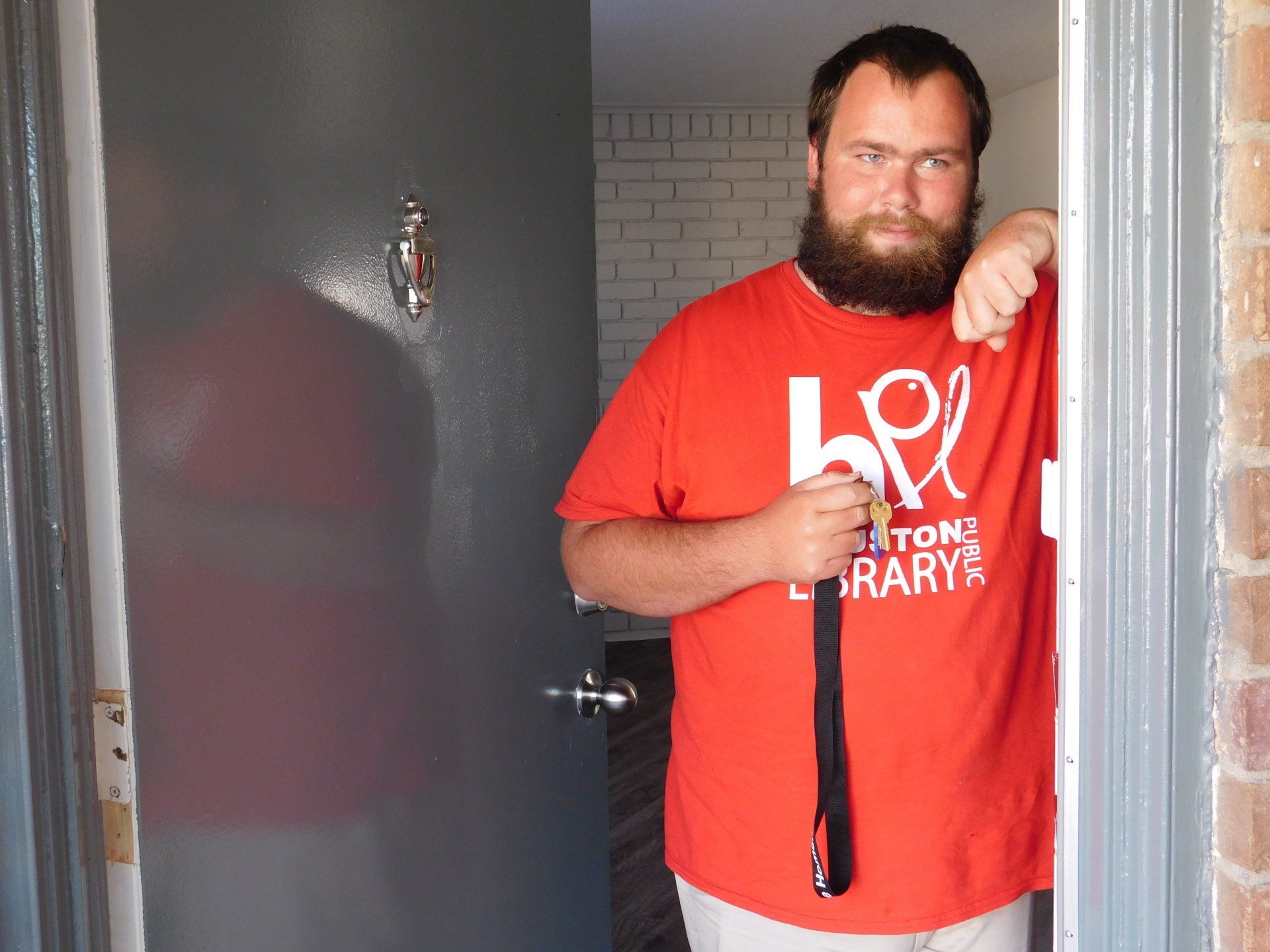
The Way Home is the collaborative effort underway to end and prevent homelessness in Harris, Fort Bend, and Montgomery counties, Texas. The Coalition for the Homeless (CFTH) serves as the designated coordinating agency for The Way Home.
Since 2012, homeless service agencies, local governments, public housing authorities, the local Veterans Affairs office, and other nonprofits and community stakeholders have been working together to refine their programs, practices, and policies so the greater Houston region can provide permanent housing and wrap-around supportive services to as many individuals and families experiencing homelessness as possible.
Currently, more than 100 partners are collaborating through The Way Home to implement programs that are all based on a Housing First model. This means that people experiencing homelessness are moved into permanent housing as quickly as possible and then are provided with supportive services (like case management, healthcare, substance use counseling, income coaching, and more) to help them remain stabilized in housing and improve their quality of life.
Since 2011, overall homelessness has decreased by over 60% in Harris, Fort Bend, and Montgomery counties. And since 2012, more than 30,000 families and individuals have been housed. Visit The Way Home website to learn more.
The Way Home Partnership
The Way Home Partnership Process Update: We are transitioning our partnership process to new software and pausing formal partnership applications and updates during this transition.
If you are interested in engaging with The Way Home in the meantime, please reach out to the appropriate contact based on your organization type:
- Nonprofits, businesses, for-profits, government entities, and faith-based organizations: Contact partnerships@cfthhouston.org
- Landlords, property managers, and property developers: Contact the CFTH Landlord Engagement Team at propertymanagers@homelesshouston.org
Thank you for your patience as we improve our systems to better serve our partners.
CoC Plans & Governance
Developing the Next Community Plan
The Way Home is developing its next Community Plan to guide regional efforts to prevent and end homelessness. Through community engagement, data, lived experience and partner collaboration, we're building a shared vision for the future.
Summer 2026: Community engagement
Fall 2026: Draft plan for public comment
Late Fall/Early Winter 2027: Final plan released
View our Community Plan One-Pager to learn more.
The Way Home Five-Year Community Plan (2021 - 2026)
The Community Plan (previously known as the Five-Year 'Action' Plan) updates The Way Home (TWH) Continuum of Care’s (CoC) 2015 and 2017 Plans, building off the accomplishments of those efforts, addressing emerging issues such as the rise of unsheltered homelessness, and seeking to mitigate the devastating impacts of the coronavirus pandemic. The updated Community Plan includes nine (9) goals and forty (40) strategies that build upon successful efforts to significantly reduce chronic homelessness, effectively end homelessness among Veterans and make major inroads in reducing family and youth homelessness.
The overall goal of this Community Plan is to achieve a functional end to homelessness in TWH CoC and, when not preventable, make homelessness a rare, brief, and non-recurring experience. The guiding principles for the Community Plan include extensive coordination among governments, nonprofit providers, and the private sector; the identification and dismantling of systematic racism; coordination of intensive outreach and crisis services; reduction in barriers to accessing needed services and care; ongoing open communication among partners; and the engagement of people with lived experience of homelessness in solving problems associated with homelessness.
View the entire Community Plan above, or view the Community Plan Fact Sheet for a quick review on our goals for The Way Home CoC.
The Way Home Plans, Policies, & Governance Documents
CoC Meetings
About CoC Meetings
Homelessness is a complex issue and effective efforts to solve it require broad community participation. Planning and implementation activities are driven by a series of leadership, planning, and process work groups that operate in tandem to achieve shared relationships, shared thinking, shared action/testing, shared evaluation, and finally shared policy proposals.
Meetings, committees, and workgroups will be established to conduct the functions necessary to support the CoC mission and meet funding obligations. Most CoC meetings, committees, and working groups are only intended for official partners of The Way Home and their staff, they may not be intended for public members of the community. Use this section of the website to learn about ongoing CoC meetings.
The Way Home Steering Committee
About the Steering Committee
About the Steering Committee
The Way Home Steering Committee serves as the leadership body—similar to a board of directors—for the local Continuum of Care (CoC). It is responsible for overseeing the planning, coordination, and distribution of federal funds aimed at preventing and ending homelessness across our region.
As outlined by the U.S. Department of Housing and Urban Development (HUD) in the CoC Interim Rule, the Steering Committee holds specific duties and responsibilities critical to the effective operation of the CoC. These responsibilities are further detailed in The Way Home Charter.
Steering Committee Membership
Membership on the Steering Committee reflects a community-wide commitment to preventing and ending homelessness. Members represent a diverse array of stakeholders from across the entire geographic region of the CoC. The Way Home Charter outlines up to 22 designated seats, with an emphasis on inclusivity and shared responsibility.
Each member must hold fiscal and program authority within their respective organizations.
Current Officers
- Chair: Barbie Brashear - Harris County Domestic Violence Coordinating Council
- Vice Chair: Tory Gunsolley – Harris County Community Services Department
- Secretary: Gregory Dread – Lived Expertise & Advocacy
Fixed Position Representatives
- Kristine Singleton – City of Pasadena Community Development
- Barbie Brashear - Harris County Domestic Violence Coordinating Council
- Melody Barr – Houston Housing & Community Development
- Rebecca Ansley – Montgomery County Community Development
- Tory Gunsolley – Harris County Community Services Department
- Ana Martinez – Fort Bend County Community Development
- Jamie Bryant – Housing Alliance TX
- Vacant – Harris County Housing Authority
At-Large Representatives
- Carlie Brown - Healthcare for the Homeless - Houston
- Robert Birdow, Jr. – Michael E. DeBakey VA Medical Center
- Amber Honsinger - The Harris Center
Provider Representatives
- Alexis Loving – SEARCH Homeless Services
- Shun Johnson – TLC Health and Wellness
Consumer Representatives
- Gregory Dread – Lived Expertise & Advocacy
- Curtis Brown – Youth & Young Adult Lived Expertise & Advocacy
Steering Committee Meeting Information
About the Steering Committee: The Way Home Steering Committee serves as the leadership body for our local Continuum of Care (CoC), overseeing planning and federal funding decisions to address homelessness.
Meeting Details:
- Occurance: Meeting occurs virtually on the second Thursday of each month at 3:00 PM (unless noted otherwise here)
- Materials: Meeting packets will be posted one week in advance. However, during high-work volume periods (e..g., PIT Count, NOFO, disaster response, etc.), the materials may be shared late/amended.
Who Should Attend?
- Open to all partner agency staff and the public
- Required for CoC-funded agencies (including YHDP-funded agencies) & those wishing to compete for CoC/YHDP funding
- CoC/YHDP-funded agencies must have one staff member attend 75% of meetings held in a year
Questions? Contact scquestions@homelesshouston.org.
2026 Meeting Schedule (subject to change)
1. Thursday, January 22, 2026, at 3 PM (Virtual)
2. Thursday, February 12, 2026, at 3 PM (Virtual)
3. Thursday, March 12, 2026, at 3 PM (Virtual) - Cancelled
4. Thursday, April 9, 2026, at 3 PM (Virtual)
5. Thursday, May 14, 2026, at 3 PM (Virtual)
6. Thursday, June 11, 2026, at 3 PM (Virtual)
7. Thursday, July 23, 2026, at 3 PM (Virtual)
8. Thursday, August 13, 2026, at 3 PM (Virtual)
9. Thursday, September 10, 2026, at 3 PM (Virtual)
10. Thursday, October 8, 2026, at 3 PM (Virtual) - Meeting Cancelled
11. Thursday, November 12, 2026, at 3 PM (Virtual)
12. Thursday, December 10, 2026, at 3 PM (Virtual)
Public Comment Guidelines
Timing of Comments
- Duration of comment will be 1 or 3 minutes. This time limit will be identified with a visible timer shared on the screen, followed by the speaker being muted when their time is complete.
- A speaker whose subject matter relates to an identifiable action item of business (i.e., action item and/or resolution) on the agenda will have the opportunity to speak during the course of the meeting, when it is time for the steering committee to deliberate on that item.
- A speaker whose subject matter does not relate to an identifiable action item of business will have an opportunity to speak during the Open Public Comment portion at the end of the meeting.
Signing up to make a public comment
- Speakers may request to make a public comment prior to the meeting. All requests must be submitted to the lead agency at SCquestions@homelesshouston.org by 12:00 PM (Noon), the day of the meeting.
- Speakers may also request to make a public comment during the meeting by using the Q&A feature or chat function in the virtual meeting software.
- In either case, in their request, the speaker must inform the lead agency of which action item they wish to speak about by citing the resolution number, if applicable. If a specific resolution number is not cited, comments will be saved for the Open Public Comment portion of the meeting.
Authority of the Chair (or Vice Chair)
- The Chair will call upon the lead agency to assist with public comments. The Chair has the authority to open and close the public speaking portion of each action item on the agenda to ensure the meeting continues to move along at a reasonable pace.
Steering Committee Materials Archive
The Way Home Provider Input Forum (PIF)

Provider Input Forum (PIF) Information
About:
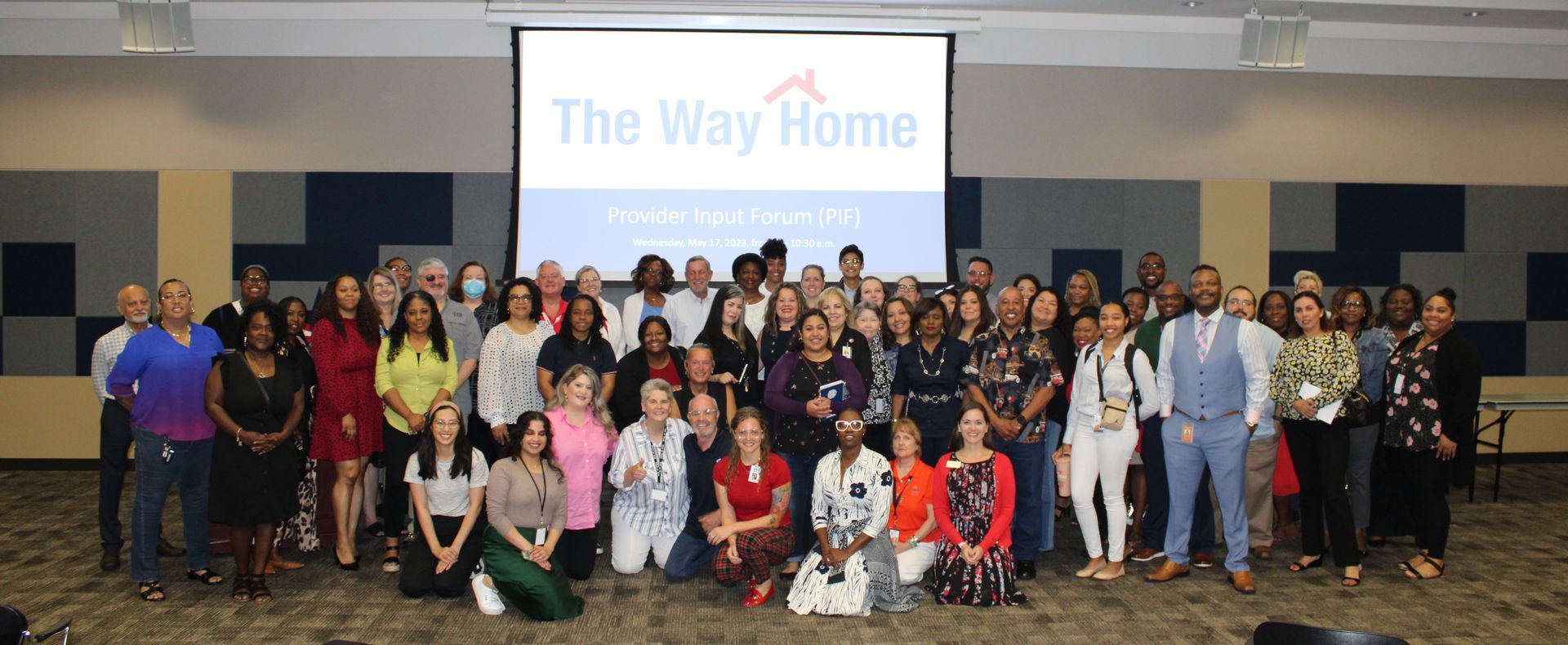
The Way Home Provider Input Forum (PIF) is a quarterly meeting in which provider agencies of The Way Home come together to address and discuss what's happening in the CoC provider community. Members of the PIF include all homeless service provider agencies (official partners), and meetings are led by the Lead Agency and Steering Committee Provider Representatives.
Who should attend?
All staff of The Way Home partner agencies are welcome and highly encouraged to attend! This is a networking opportunity for partners to connect, share resources, and learn how to better serve those experiencing homelessness.
Have something to share at the PIF?
Email us at PIF@cfthhouston.org
Partners can use this address to:
- Share announcements or updates to be included at the PIF
- Recognize and give kudos to agencies that have gone above and beyond
We’d love to hear about the great work happening across our system—send us your shout-outs and highlights!
PIF Meeting Schedule (subject to change)
The location and parking instructions for all meetings are:
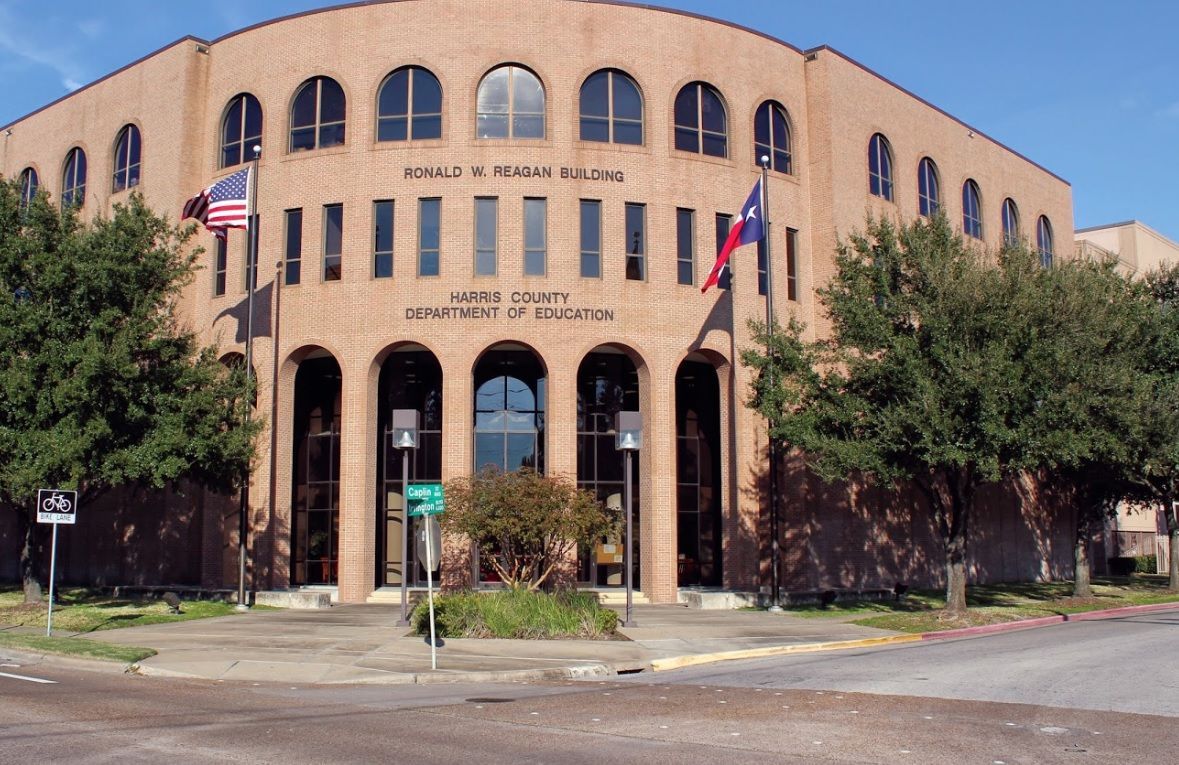
- Harris County Department of Education (6300 Irvington Blvd., Houston, TX 77022) - Main building, Room 100 A, B, & C
- The Harris County Department of Education parking garage is free. If the garage is full, please use the parking lot located across the street.
1st Quarter Provider Input Forum (PIF)
Wednesday, March 18, 2026
9:00 AM – 10:30 AM
2nd Quarter Provider Input Forum (PIF)
Wednesday, June 3, 2026
9:00 AM – 10:30 AM
3rd Quarter Provider Input Forum (PIF)
Wednesday, September 23, 2026
9:00 AM – 10:30 AM
Provider Input Forum (PIF) Materials Archive
Annual Homeless Response System Conference
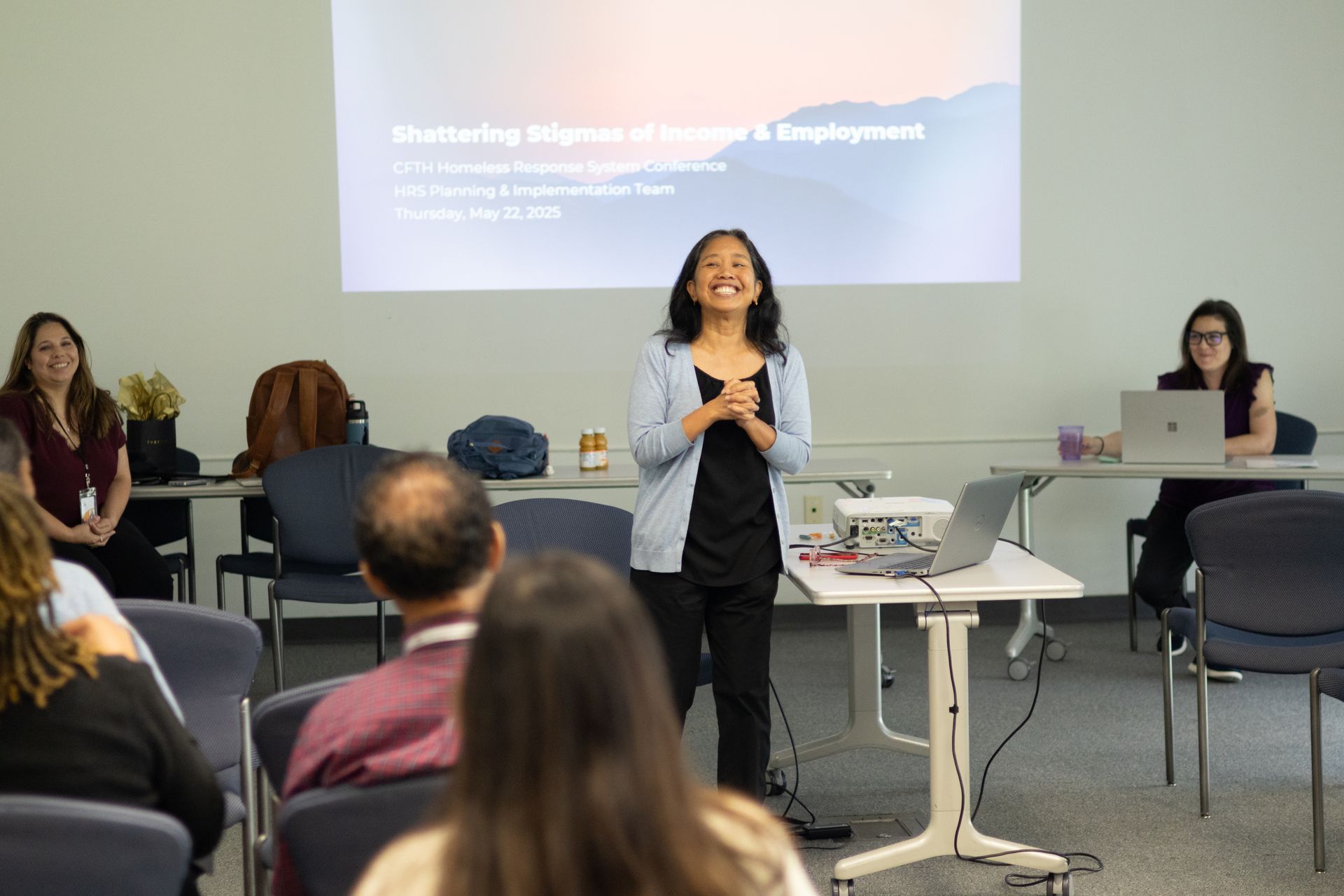
Join us for our 3rd Annual Homeless Response System Conference.
The Homeless Response System Conference brings together service providers, community partners, system leaders, development and fundraising teams, and stakeholders to strengthen collaboration and advance solutions across the Homeless Response System.
This one-day conference focuses on shared learning, best practices, and system alignment to improve access, equity, and outcomes for individuals and families experiencing homelessness.
Attendees will hear directly from subject matter experts on key topics, including coordinated entry, data quality, housing stability, trauma-informed care, policy updates, and strategies for developing and strengthening fundraising teams.
Sessions will explore how policy changes and organizational capacity-building efforts support system performance and sustainability, while offering practical tools, real-world examples, and opportunities for dialogue.
The conference supports cross-agency coordination, informed decision-making, and the development of a more responsive, sustainable, and person-centered system of care.
WHEN
Thursday, May 28, 2026
9:00 AM – 4:00 PM
Annual Data Symposium
Join us for the 3rd Annual Data Symposium,
Advancing Service Delivery Outcomes Through Data-Driven Strategies.
This event explores how data-driven strategies improve homeless service delivery to ensure that everyone has a safe place to sleep at night and an exit pathway within 90 days. It brings together technology professionals, data experts, healthcare and criminal justice officials, and local homeless response leaders to discuss data-informed decisions that transform our system to make it more accountable, equitable, and efficient.
It provides a platform for experts to share their work, knowledge, experiences, best practices, and cutting-edge technologies that support addressing and ending homelessness. Topics include the following:
- Data Quality and Integrity: How organizations collect and manage data, including best practices for maintaining data quality.
- Partnerships and Collaborations for Data Excellence: Highlights the benefits of collaborations in achieving data-driven goals.
- Data-Driven Enhancements: How data-driven solutions have improved service delivery, with examples from agencies' work.
- Innovations in Addressing Homelessness: How agencies plan to incorporate innovations such as API integrations, AI assistants, import/export processes, special dashboards, and other technologies to further address homelessness.
For more information, please contact Agnes Asigbey at agnes.asigbey@cfthhouston.org.
WHEN
Thursday, May 6, 2027
8:00 AM – 4:00 PM
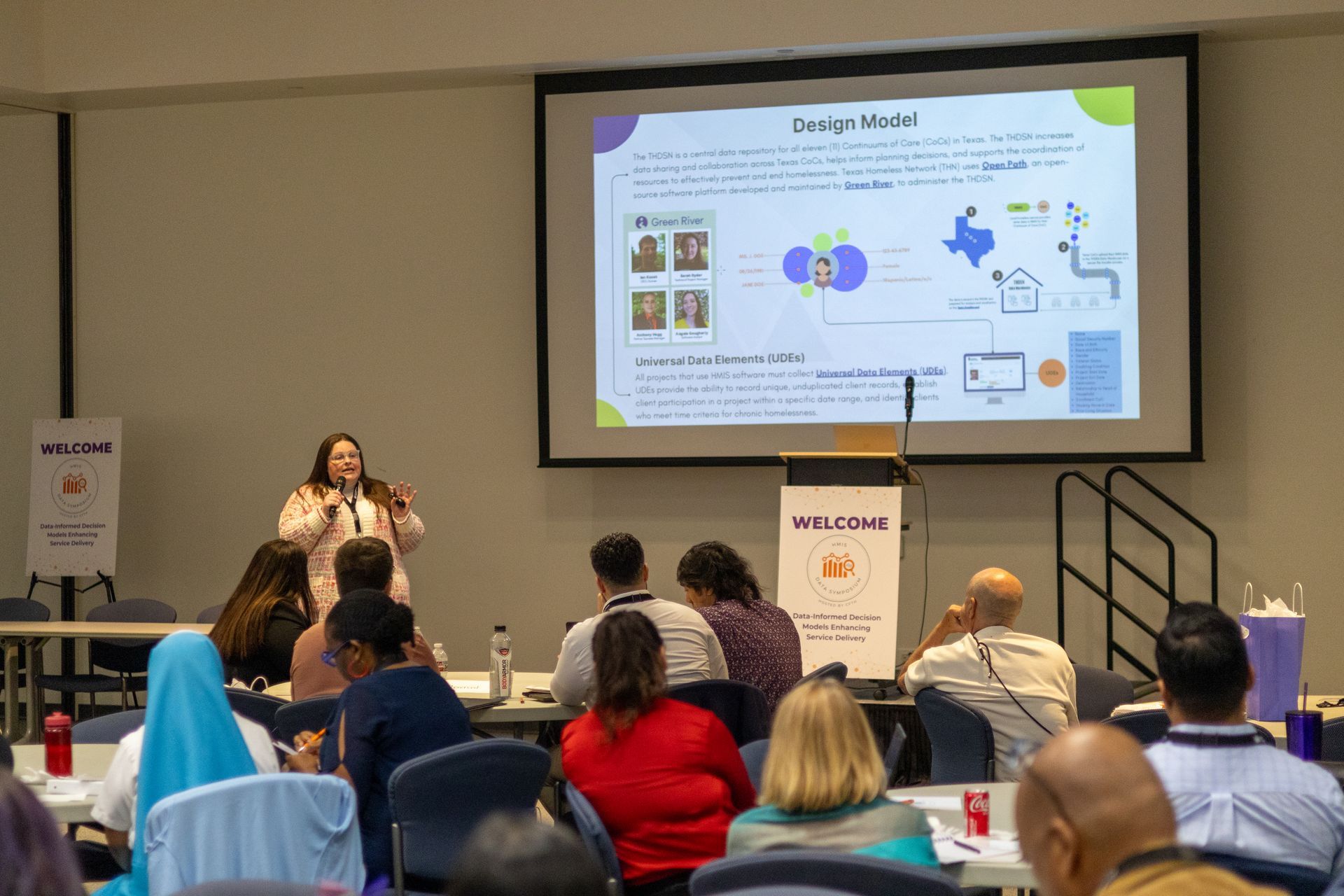
Past Annual Data Symposiums
2026 Presentations
View the 2026 program here.
View the presentations below:
- Data Quality & Integrity, Building Trust in the Numbers - United Way of Greater Houston
- Building the Community Mosaic - Simtech Solutions, Inc.
- Regional Data-Driven Strategies Across Texas - THN
- Regional Data-Driven Strategies Across Texas - Housing Forward
- Data In Action: HMIS and Healthcare CrossSystem Integration - CFTH
- The Future of Coordinated Entry: Using Data Science to Understand and Improve Housing Pathways - University of Houston
- Domestic Violence & Data System Design - HAWC and Ft. Bend Women's Center
- Criminal Justice & Re-Entry, Using Data to Support Continuity of Care - City of Houston and CFTH
2025 Presentations
View the 2025 program here.
View the presentations below:
- From Data to Action: Strategies for Quality- United Way of Greater Houston
- The Ongoing Efforts of the THDSN and Its Crucial Role in Revolutionizing Homeless Response- Texas Homeless Network
- Piecing It Together: Rethinking the Homeless Response Framework- Simtech Solutions, Inc.
- Data in Action: Driving Impact and Outcomes through Collaboration- CFTH and Patient Care Intervention Center
CoC Workgroups
About The Way Home Workgroups
The Way Home is comprised of standing committees, workgroups, and task workgroups which have various roles and responsibilities. Several workgroups are designated by
The Way Home Charter. Ad hoc working groups and task workgroups may be formed by the Steering Committee or Lead Agency, and given specific responsibilities as needed by the Continuum of Care (CoC).
Workgroups are the action planning and implementation components of the system; Work groups are where the work happens and only meet when there is work to be done. They also serve as Lead Agency driven, peer-supported, performance management meetings for nearly every aspect of system performance.
Workgroups may make recommendations for Resolutions to the Steering Committee regarding CoC policies and procedures, report outcomes and data analytics, and recommend performance measures and suggestions for system improvements. The Lead Agency is responsible for supporting each work group, identifying a facilitative lead and project manager, managing communications, and accessibility for interested members.
The implementation and performance management work groups are only accessible to the agencies delivering the services as client-level information is discussed within these meetings. Leadership and planning meetings are more accessible to a larger audience and interested parties can contact the Coalition for the Homeless for more information on how to participate.
CoC Lived Experience Groups
Consumer Advisory Council (CAC)
About the CAC: The Way Home Consumer Advisory Council (CAC) is a leadership advisory body that consists of members with current or past lived experience of homelessness. The CAC provides a platform for people who have experienced homelessness to share their firsthand experiences and provide meaningful input to improve The Way Home Continuum Of Care (CoC); our local homeless response system. Members of The Way Home CAC bring a unique perspective to the homeless response system, providing consultation and advocacy for ways to improve our supportive housing system and the services provided. As a member of the CAC, people have the opportunity to contribute to the improvement of homeless response system and have their voice heard.
The CAC meets monthly to discuss any new or ongoing business. And as a member of the CAC, people are compensated for their time; including monthly meetings and any other special projects that may require their time and expertise.
How to join: If you have experienced homelessness and want to help improve how services are delivered in our community, we encourage you to apply. The lived experience and expertise of CAC members play an important role in strengthening The Way Home homeless response system.
To learn more about the CAC or become a member, please apply here.
Questions? Please email Angel Garmon at angel.garmon@cfthhouston.org.
Youth Action Board (YAB)
About the YAB: The Youth Action Board (YAB) is a leadership group made up of young people with lived experience of homelessness. As part of The Way Home, Houston's homeless response system, the YAB helps shape strategies, programs, and investments that affect youth and young adults experiencing homelessness.
YAB members provide expertise that helps community leaders understand the barriers young people face when seeking housing and support. Their recommendations help improve services, guide new initiatives, and strengthen the community's response to youth homelessness.
How to join: If you have experienced homelessness, housing instability, foster care involvement, couch surfing, shelter stays, or other housing challenges, we encourage you to apply.
Your experience is expertise. Your perspective can help improve programs, influence decisions, and create better outcomes for young people experiencing homelessness.
To learn more about the YAB or become a member, please apply here.
Questions? Please email Angel Garmon at angel.garmon@cfthhouston.org.